The rapid decarbonization of localized transportation across South Korea—spanning smart city micro-mobility networks in Songdo and Sejong to luxury resort shuttles in Jeju Island and heavy-duty logistics complexes in Incheon and Pyeongtaek—has fundamentally elevated the demand for high-reliability, street-legal electric passenger carts and motorized material handling platforms. As a premier Chinese original equipment manufacturer (OEM) and global exporter, our manufacturing ecosystem bridges advanced automotive-grade engineering with strict South Korean regulatory compliance.
Navigating South Korea's micro-mobility sector requires far more than standard off-road golf cart assembly. It demands low-speed electric vehicles (LSVs) engineered precisely for registration with local government authorities under the guidelines set by the Ministry of Land, Infrastructure and Transport (MOLIT) and tested in accordance with Korea Automobile Testing & Research Institute (KATRI) standards. By incorporating manufacturer-assigned 17-digit Vehicle Identification Numbers (VIN), World Manufacturer Identifier (WMI) credentials, and Department of Transportation (DOT) compliant safety equipment, our passenger carts transition seamlessly from private estates and golf resorts onto municipal public roads posted at 35 mph (55 km/h) or less.
Full Regulatory Alignment
Engineered for MOLIT municipal registration, equipped with FMVSS/DOT lighting, dual-circuit hydraulic braking, safety-glass windshields, and three-point seatbelt assemblies.
End-to-End WMI Traceability
Every street-legal vehicle is permanently stamped with a unique 17-digit VIN under our registered World Manufacturer Identifier, satisfying Korean customs and licensing standards.
A critical pain point for commercial operators in South Korea—particularly across the mountainous topography of Gangwon-do and the chilly winter corridors of Gyeonggi-do—is severe cold-weather battery capacity degradation and steep incline stalled power. Standard electric carts equipped with conventional lead-acid or unheated lithium batteries experience up to 40% range compression when operational temperatures drop below freezing (-10°C to -15°C).
To solve this local environmental bottleneck, our street-legal passenger carts and heavy-duty utility platforms utilize advanced Lithium Iron Phosphate (LiFePO4) battery packs equipped with integrated PTC auto-heating Battery Management Systems (BMS). When connected to a standard charging terminal or activated via pre-conditioning modes, the intelligent BMS maintains internal cell temperatures within an optimal thermal window (15°C to 25°C), ensuring 95%+ nominal range retention even in harsh Korean winter conditions.
Performance Specification
Standard Import Golf Carts
Our Homologated Korea-Spec Passenger LSVs
Commercial Impact / Information Gain
Winter Efficiency (-15°C)
50% - 60% Range Retention
92% - 96% Range Retention
Prevents winter fleet shutdown in Gangwon/Gyeonggi regions.
Chassis Architecture
Welded Mild Steel (Prone to Rust)
Hot-Dip Galvanized Aluminum Frame
15+ year anti-corrosion life span in humid coastal climates like Jeju.
Gradient Hill Climbing
15% - 20% Grade Ability
30% - 35% Grade Ability (High-Torque AC/PMSM)
Conquers steep Korean mountain roads and elevated golf course ramps easily.
Braking & Safety
Rear Mechanical Drum Brakes
Four-Wheel Hydraulic Disc + Regenerative Braking
Shortens stopping distance by 45% on wet or icy road surfaces.
Road Legal Homologation
None (Off-Road Only)
17-Digit VIN / WMI / DOT-Lighting / KC Compliant
Enables legal municipal street registration for micro-mobility fleets.
Localized Application Scenarios Across the South Korean Market
Our comprehensive product lineup—ranging from 2, 4, and 6-passenger street-legal LSVs to 1.5-ton hydraulic flatbed transporters and self-unloading motorized dumpers—is specifically engineered for high-intensity duty cycles across South Korea's key economic sectors:
1. Luxury Resorts & Eco-Tourism (Jeju Island & Gangwon)
Quiet, zero-emission passenger transport with custom leather interior finishes, panoramic sunshades, and weather-proof enclosures. Perfect for seamlessly moving guests between coastal villas, lobbies, and leisure facilities without noise pollution.
2. Smart Logistics & Industrial Parks (Incheon & Pyeongtaek)
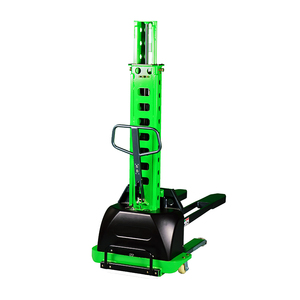
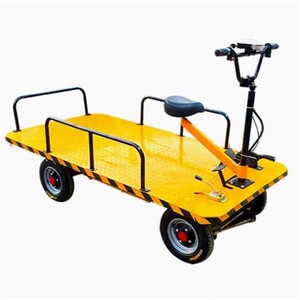
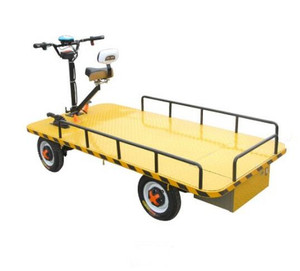
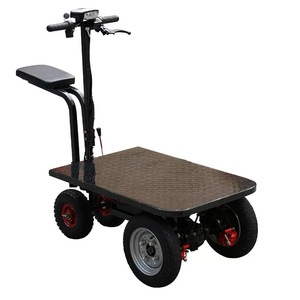
Heavy-duty electric flatbeds, motorized ride-on platform carts, and 1.5-ton polyurethane pallet jacks designed for high-density indoor/outdoor factory floors, bonded logistics warehouses, and automated distribution hubs.
3. Mountainous Country Clubs & Golf Courses
High-torque 72V AC direct-drive powertrains equipped with turf-friendly radial tires, automatic hill-hold electromagnetic parking systems, and high-regen braking that recovers energy on steep downhill cart paths.
4. Urban Smart City Micro-Mobility (Songdo & Sejong)
Street-legal 2, 4, and 6-seat neighborhood electric vehicles (NEVs) capable of 25 mph cruising speed, fully equipped with turn indicators, horn, high/low beam headlights, dual side mirrors, and DOT safety glass windshields for suburban street transit.
5. Modern Agriculture & Urban Construction
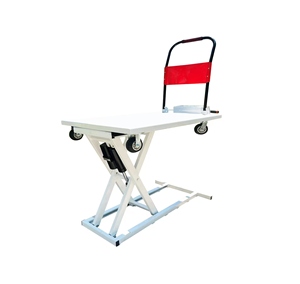
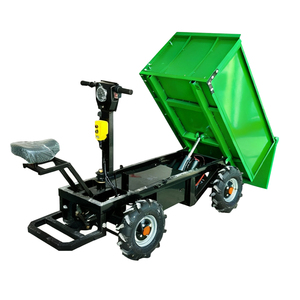
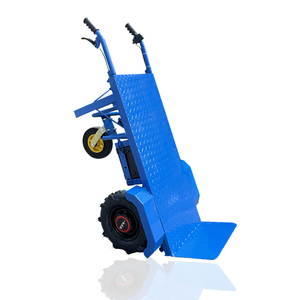
Motorized mini dumpers with hydraulic self-unloading beds, stair-climbing crawler carts for multi-level green buildings, and hydraulic scissor-lift greenhouse carts tailored for specialized crop harvesting and facility maintenance.
6. Corporate & University Campuses (Seoul Metro Area)
Scheduled campus shuttles and security patrol vehicles with automated charging port integration, durable powder-coated steel bumpers, and multi-passenger seating arrangements for daily staff and student mobility.
Macro Mobility Trends in Korea & B2B Purchasing Advantage
South Korea's national "K-EV" initiatives and carbon neutrality targets for 2030 have placed immense pressure on private resort operators, industrial complexes, and municipality contractors to phase out internal combustion engine (ICE) utility carts. Furthermore, the rising cost of labor in Korea makes high-efficiency, multi-functional material handling tools—such as stair-climbing shopping carts and hydraulic lifting flatbed trolleys—an attractive investment for operational cost reduction.
Key Advantages of Partnering with Our Manufacturing Ecosystem:
Direct China-to-Korea Shipping Logistics: Fast maritime freight connections from Qingdao, Ningbo, and Shanghai directly to Busan and Incheon ports, minimizing transit lead times to as short as 3 to 5 days.
China-Korea FTA Duty Optimization: Under the China-Korea Free Trade Agreement, qualifying electric vehicles and utility machinery imported under HS Code 8703.90 or 8709.11 benefit from preferential tariff rates, dramatically lowering landing costs.
Modular OEM/ODM Flexibility: From customized body paint matching corporate branding to specialized hydraulic bed lift dimensions, custom battery bank sizing, and right-hand/left-hand drive configurations, every order is tailored to Korean buyer specifications.
CKD / SKD Assembly Support: For Korean regional distributors seeking local assembly or tax optimization, we offer Complete Knock-Down (CKD) and Semi-Knock-Down (SKD) packaging with full engineering manuals and technician training.
What is the explicit difference between a standard golf cart and a street-legal Low-Speed Vehicle (LSV)?
A standard golf cart is designed exclusively for off-road resort or golf course grounds, restricted to speeds of approximately 15 mph (24 km/h), and lacks necessary safety hardware. Conversely, a low-speed vehicle (LSV) is a federally recognized motor vehicle class capable of speeds up to 25 mph (40 km/h). LSVs are manufactured with DOT-compliant automotive safety glass windshields, three-point seat belts, high/low beam headlights, turn signals, dual rearview mirrors, hydraulic four-wheel braking, and a unique 17-digit VIN tied to a registered World Manufacturer Identifier (WMI). This enables legal registration for street use on roads posted at 35 mph or lower in accordance with local South Korean municipal laws.
Does every electric passenger cart exported to Korea include a 17-digit VIN?
Yes. All street-legal passenger cart configurations (2-seater, 4-seater, and 6-seater) ordered under our LSV line come standard with a factory-assigned 17-digit VIN stamped directly into the heavy-duty chassis frame. This VIN links back to our registered WMI manufacturer status, providing complete traceability required for Korean customs clearance, KATRI alignment, insurance coverage, and vehicle titling.
How do your lithium battery systems handle South Korea's cold winter temperatures?
Our Korea-bound electric carts are integrated with Smart Low-Temperature Heating Lithium Iron Phosphate (LiFePO4) battery systems. The internal BMS monitors cell temperatures automatically. When operating or charging in sub-zero ambient conditions (down to -20°C), the integrated thermal heating matrix warms the cells to optimal temperature before allowing high-current discharge or rapid charging, effectively preventing range degradation and extending total cell cycle life beyond 3,500+ cycles.
Can Korean industrial buyers request customized features like hydraulic lifts or stair-climbing capabilities?
Absolutely. Beyond passenger transportation, we manufacture dedicated specialized utility vehicles, including 1.5-ton pallet jacks, custom scissor-lifting greenhouse carts, hydraulic self-unloading mini dumpers, and tri-wheel stair-climbing shopping and cargo trolleys. All models can be tailored in terms of platform size, motor wattage (AC/PMSM), payload capacity, body color, and tire tread patterns.
What is the typical shipping lead time and customs process for orders delivering to Busan or Incheon?
Manufacturing lead time for customized fleet orders ranges between 15 to 25 days depending on specification complexity. Maritime transport from eastern Chinese ports (Qingdao/Shanghai/Ningbo) to Busan or Incheon takes only 3 to 5 days. We provide full trade documentation—including Bill of Lading, Certificate of Origin under China-Korea FTA, Commercial Invoice, Packing List, and VIN Compliance Certificates—to guarantee smooth Korean customs entry.
How are warranty, spare parts, and aftermarket support handled for international buyers?
We provide a comprehensive factory warranty covering the chassis frame for 5 years, lithium battery packs for 3 to 5 years, and electrical controllers/powertrain components for 2 years. Essential spare parts (controllers, solenoids, brake pads, LED light units, BMS modules) are packed and dispatched swiftly via express air freight (DHL/FedEx) or shipped in consolidated container lots for dealer inventory stocking in South Korea.
Request Product Catalogs & Wholesale B2B Pricing
Partner with China's leading OEM street-legal electric cart and industrial mobility exporter serving South Korea. Download complete specification sheets, VIN compliance documentation, and factory direct quotes today.