Evaluating manufacturer engineering standards, battery thermal dynamics, payload volumetric ratios, and operational Total Cost of Ownership (TCO) for global last-mile commercial fleets.
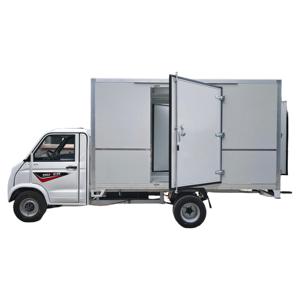
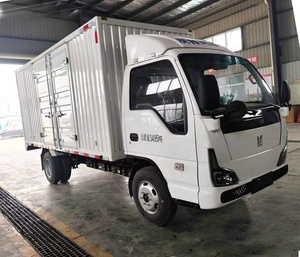
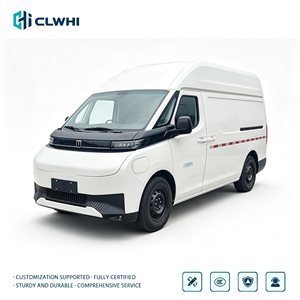
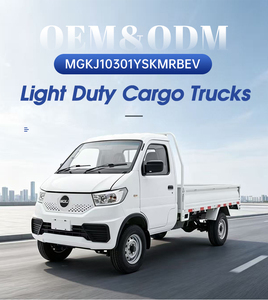
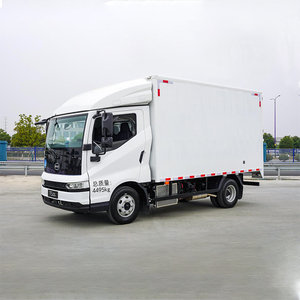
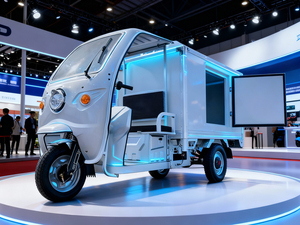
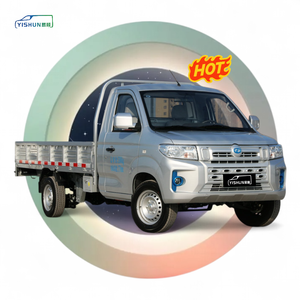
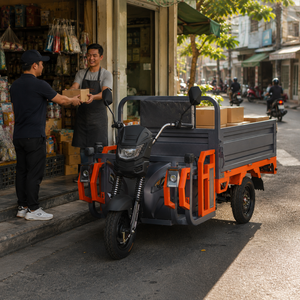
Procuring commercial delivery EVs requires verified manufacturing authority beyond third-party re-badging. As a verified vehicle manufacturer equipped with a registered World Manufacturer Identifier (WMI) and international 17-digit Vehicle Identification Number (VIN) assignment protocols, our platform ensures every export chassis maintains absolute regulatory traceability.
From high-density CATL LFP battery integrations to Federal Motor Vehicle Safety Standards (FMVSS) structural compliance, our commercial light trucks, urban vans, and cold-chain vehicles are engineered for rigorous daily fleet operation. OEM documentation, safety glass windshields, braking systems, and DOT-certified lighting packages are pre-integrated into assembly line workflows.
Every commercial EV is assigned a unique WMI-backed 17-digit VIN for seamless title registration and fleet tracking.
Active liquid heating and cooling loops ensure LFP batteries sustain peak performance in extremes from -20°C to 55°C.
High-voltage architecture supports CCS1, CCS2, and GB/T fast-charging standards to minimize hub downtime.
High-tensile steel boxed ladder frame designs prevent chassis flex under max 1.5T payload loads.
Understanding the core shifts shaping commercial electrification: from battery chemistry advancements to modular chassis versatility.
The commercial EV landscape has transitioned from adapted internal combustion engine (ICE) conversions to purpose-built, native electric architectures. Modern last-mile logistics require continuous multi-shift operations where passive air-cooled batteries are no longer viable.
Leading exporters now standardise on Lithium Iron Phosphate (LFP) chemistry integrated with cell-to-pack (CTP) structural configurations. LFP chemistry eliminates cobalt dependency, lowers raw thermal run-away risks to near zero, and delivers 3,500+ full charge-discharge cycles before reaching 80% capacity retention. Coupled with intelligent CAN-bus telematics, fleet operations can remotely monitor real-time State of Charge (SoC), cell voltage balancing, and thermal stress points across global vehicle deployments.
Transporting temperature-sensitive pharmaceuticals, fresh produce, and frozen goods requires continuous refrigeration. Traditional cold-chain vehicles suffered severe traction range degradation when the electric compressor drew power directly from the main drive battery pack.
Recent manufacturing innovations feature dual-circuit electrical architectures. High-efficiency roof-mounted monocrystalline solar arrays feed an auxiliary lithium bank dedicated exclusively to running digital DC compressors (maintaining temperatures down to -18°C). This hybrid energy control loop protects the main powertrain's range while maintaining continuous temperature logging required for regulatory food and medical compliance.
Quantitative evaluation across micro last-mile, heavy urban vans, and commercial light trucks.
| Vehicle Class Category | Typical Payload Mass | Battery Technology | Effective Operating Range | Primary Application Zone | Compliance Standard |
|---|---|---|---|---|---|
| Micro Cargo Tricycles (SCHI Series) | 160L - 400kg | 60V/72V Heavy-Duty Lead-Acid / LFP Option | 60km - 90km per charge | High-density urban alleyways, micro-hubs | CE / EEC Low-Speed Vehicle |
| Refrigerated Micro EV (970L Unit) | 350kg (Insulated Box) | Deep-Cycle Lithium + Solar Auxiliary Link | 80km - 110km (+ Continuous -18°C) | Last-mile cold-chain food & pharma delivery | DOT / ISO Temperature Certified |
| Neighborhood Electric Pickup (RHD 1.5T) | 1,500kg (1.5 Ton) | Modular LFP Energy Storage Pack | 120km - 160km continuous load | Estate management, urban municipal cargo | FMVSS / DOT Street-Legal LSV |
| Commercial Urban Van (DFSK EC71L) | 850kg - 1,100kg | 50.23kWh CATL LFP Pack | 262km (Urban Duty Cycle) | City express parcel distribution, retail fleets | WMI Titled / Full Commercial EV |
| Heavy-Duty Light Truck (BYD T5 / Farizon V8E) | 1,470kg - 3,000kg | Up to 100kWh CATL / BYD Blade Pack | 200km - 460km Extended Highway Range | Inter-city logistics, heavy cargo forwarding | Global OEM Commercial Truck Standard |
Commercial fleet procurement has shifted from initial purchase price (CAPEX) focus to total operational lifecycle yield (OPEX). Enterprise buyers evaluating global exporters prioritize key parameters:
1. Vehicle-to-Grid (V2G) and Telematics Standardization: Modern delivery fleets integrate open-API CAN-bus hardware. Fleet management platforms harvest real-time energy consumption, predictive brake wear, and route efficiency metrics. V2G capability allows delivery vehicles to back-feed energy to logistics warehouses during peak utility tariff hours.
2. Modular Chassis & Quick Body Conversion: Exporters utilizing standardized cab-chassis platforms allow fleet managers to swap cargo bodies—from dry box vans to insulated cold-chain units or open drop-side beds—on identical chassis rails, drastically lowering spare-parts complexity.
3. Regulatory Import Compliance & Spare-Part Security: Sourcing from established manufacturers with registered WMI and FMVSS alignment guarantees long-term availability of wear-and-tear components (steering racks, control arms, BMS modules) and smooth customs clearing across international borders.
Seamless API integration into fleet management systems like Samsara, Geotab, and customized enterprise portals.
Real-time cell degradation tracking and automated fault warning telemetry prevent unplanned breakdown events.
Integrated pedestrian warning systems tailored to meet European and North American low-speed noise regulations.
Standardized sub-frame mounting points allow rapid box swap out within 60 minutes in warehouse hubs.
Addressing critical engineering, compliance, tariff, and operational queries raised by global fleet procurement directors.
Street-legality depends on vehicle class registration. Our commercial electric vans and light trucks carry a 17-digit Vehicle Identification Number (VIN) issued under a registered World Manufacturer Identifier (WMI). Vehicles comply with FMVSS (US Low-Speed Vehicle / Commercial standards) or EEC (European Whole Vehicle Type Approval), fitted with safety glass, DOT-marked lighting, three-point seat belts, and dual-circuit braking.
Our insulated delivery vans utilize high-density polyurethane injection wall insulation (R-value rated) paired with high-efficiency 24V/48V electric compressors independent of traction drive loops. Solar auxiliary roof panels supply continuous maintenance charging to keep temperatures down to -18°C even during driver lunch breaks or extended loading dock delays.
Vehicles equipped with CATL LFP or BYD Blade battery chemistry deliver 3,000 to 4,000 complete charge cycles before degrading to 80% original capacity. Under standard single-charge daily logistics cycles (approx. 200km/day), the battery pack offers an operational service life exceeding 8 to 10 years, supported by liquid-cooled active thermal management.
Yes. Models such as our 1.5T Neighborhood Electric Pickup Truck and select urban cargo vans feature factory-built Right-Hand Drive (RHD) assemblies designed specifically for export to the UK, Australia, South Africa, India, and Commonwealth regions, including appropriate headlight beam masking and RHD dashboard ergonomics.
Vehicles support dual AC and DC fast charging. Smaller trikes and micro vans recharge via standard single-phase AC wall outlets (110V-240V). Larger commercial vans (e.g., Farizon V8E, Qingling EV100) support CCS Combo 1/2 or GB/T DC fast charging up to 80kW, restoring 20% to 80% charge in 45 minutes for rapid turnaround.
We provide full OEM warranty backing (typically 3-5 years on battery/powertrain, 2 years on chassis structure). For commercial fleet purchases, we bundle essential wearing parts kits (braking pads, relays, suspension bushings) directly with container shipments and maintain technical support hubs for fast global air dispatch.
Connect with our OEM engineering team to request detailed specification sheets, export tariff documentation, custom payload volume configurations, or wholesale fleet pricing.
