Precision-Engineered Industrial Carts, Motorized Trolleys, and Custom Platform Haulers
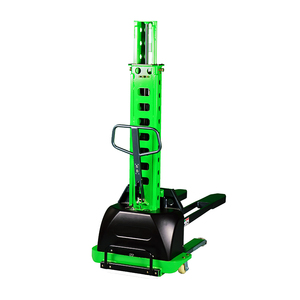
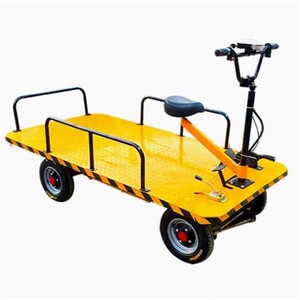
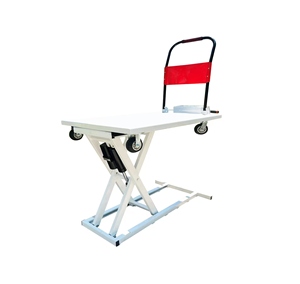
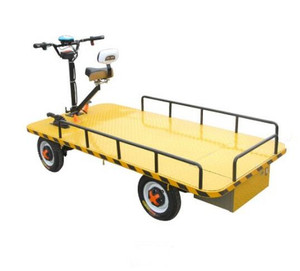
Technical Whitepaper & Strategy Guide for Enterprise Fleet Operators and Procurement Directors
Modern industrial intra-logistics are undergoing a seismic transformation. As global supply chains accelerate toward zero-emission mandates and lean manufacturing paradigms, traditional internal combustion engine (ICE) tuggers and manual hand trucks are being rapidly phased out. Enterprise procurement officers are now evaluating battery-powered electric carts and platform trolleys not merely as basic haulage tools, but as critical components of smart automated operational workflows.
According to recent industry benchmarking data, switching from manual pushing equipment to electric-assisted motor platforms reduces workplace ergonomics injuries by up to 68% while boosting intra-facility material transport speed by 210%. Furthermore, advanced battery electric carts—ranging from 500kg stair-climbing hand trucks to 1.5-ton motorized pallet jacks—offer unparalleled total cost of ownership (TCO) advantages, eliminating fuel costs and dramatically minimizing maintenance schedules.
As an industry-leading manufacturer and international exporter of industrial electric carts and Low-Speed Electric Vehicles (LSVs), our operations are backed by rigorous engineering protocols, standardized quality assurances, and full regulatory transparency. Operating with direct manufacturer registration, international World Manufacturer Identifier (WMI) credentials, and 17-digit VIN capabilities, we deliver vehicles engineered to withstand demanding multi-shift industrial duty cycles.
Every vehicle produced under our OEM agreement features complete serial number and 17-digit VIN tracking. This guarantees legal compliance for street-legal LSV registration, simplified customs clearance, and straightforward insurance underwriting across European and North American markets.
Our street-legal electric cart platforms integrate full Department of Transportation (DOT) approved safety glass windshields, dual side mirrors, 3-point seatbelts, high-illumination LED headlights, turn indicators, and electromagnetic regenerative braking systems.
Built upon robotic-welded high-tensile carbon steel structural frames, treated with anti-corrosion electrophoretic dip coating (KTL), protecting against chemical degradation in humid greenhouse environments, cold storage, or coastal ports.
Selecting the optimal power supply and drive engine is essential to achieving low lifecycle operational costs. The technical breakdown below compares modern Lithium Iron Phosphate (LiFePO4) systems against legacy Lead-Acid alternatives across key industrial benchmarks.
| Performance Parameter | Lithium Iron Phosphate (LiFePO4) | Absorbed Glass Mat (AGM / Lead-Acid) | Impact on Enterprise Operations |
|---|---|---|---|
| Cycle Life (80% DOD) | 3,500 – 5,000 Cycles | 500 – 800 Cycles | LiFePO4 delivers 5x longer operational life span. |
| Charge Efficiency | 98% Energy Conversion | 75% – 80% Energy Conversion | Dramatically lowers facility electrical billing overhead. |
| Opportunity Fast Charging | Supported (0% to 100% in 1.5-2 hrs) | Not Supported (Requires 8-10 hr cool down) | Enables continuous 24/7 multi-shift logistics workflow. |
| Payload Weight Ratio | Ultra-Lightweight (High Energy Density) | Heavy (Adds deadweight to cart) | Increases usable payload capacity by up to 25%. |
| Maintenance Overhead | Zero Maintenance (Integrated Smart BMS) | Periodic Fluid Checks / Terminal Cleaning | Eliminates manual labor upkeep costs completely. |
Key Innovation Vectors Driving Next-Generation Battery Cart Designs
As enterprise Buyers evaluate multi-year equipment supply agreements, staying ahead of technological advancements ensures capital investments remain productive and protected against rapid obsolescence. Industry analysis points to four major technological trends shaping the global battery cart manufacturing sector:
Next-generation electric platform carts now incorporate CAN-bus integrated IoT modules. Facility managers can monitor real-time battery State of Health (SOH), location tracking, speed monitoring, shock/collision telemetry, and predictive maintenance alerts via cloud dashboards.
The boundary between manual electric carts and Autonomous Guided Vehicles (AGVs) is blurring. Modern platform trolleys are engineered with "AGV-ready" sensor ports, allowing modular installation of LiDAR, optical line followers, and ultra-wideband (UWB) tracking modules.
To support completely seamless material handling in automated manufacturing lines, high-frequency wireless charging pads integrated into warehouse floors allow carts to top up power autonomously during loading and unloading pauses.
Direct Insights for Purchasing Managers, OEM Importers, and Logistics Operators
Consult with our Senior OEM Engineers to request custom technical drawings, volume bulk pricing discounts, and detailed export shipping quotes tailored to your business needs.
Get a Quote