The global low-speed vehicle (LSV) and commercial electric passenger buggy market has undergone a structural paradigm shift. International procurement directors, fleet operators, master distributors, and hospitality procurement leaders no longer seek simple, low-cost golf carts. Today's commercial mandate requires high-yield, road-ready, compliance-engineered electric passenger buggies backed by legitimate original equipment manufacturers (OEMs). When sourcing from China's premier passenger buggy factories, institutional buyers must evaluate facilities based on standardized vehicle manufacturing frameworks rather than basic assembly metrics.
Leading Chinese manufacturing hubs have evolved from basic tubular steel welding workshops into advanced automotive-grade production environments. Leading OEM factories incorporate robotic MIG welding cells, cathodic electrocoating (E-Coat) anti-corrosion dip tanks, automated chassis alignment rigs, and computerized CAN-bus testing lines. Sourcing direct from Tier-1 Chinese factories ensures that every chassis framework exhibits dimensional consistency, structural rigidity, and superior tensile strength suitable for high-frequency resort shuttling and rugged off-road multi-passenger transportation.
Core Pillars of Factory Validation
VIN & WMI Licensing
Verified World Manufacturer Identifier (WMI) code capability ensuring every vehicle leaves the assembly line with a legally compliant 17-digit ISO 3779 Vehicle Identification Number for DMV registration.
Modular Chassis Architecture
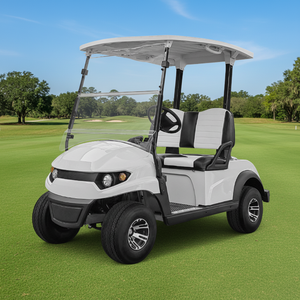
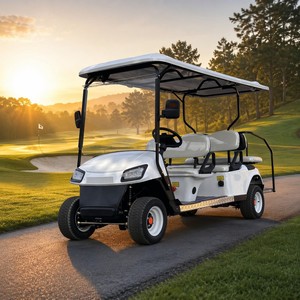
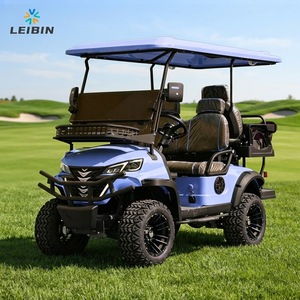
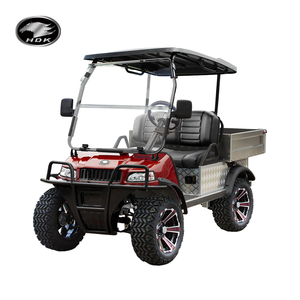
Unified ladder-frame and lightweight aluminum alloy chassis engineering allowing seamless platform sharing across 2-seater, 4-seater (2+2), 6-seater (4+2), and 8-seater shuttle configurations.
Automotive Safety Standards
Compliance with US FMVSS 500 standards, including three-point seat belts, AS1/AS2 laminated safety glass windshields, DOT-approved LED lighting packages, and dual-circuit hydraulic braking systems.
To eliminate ambiguity in procurement contracts, the engineering matrix below outlines the standardized technical baselines specified by premier Chinese passenger buggy factories for high-end international distribution:
Platform Parameter
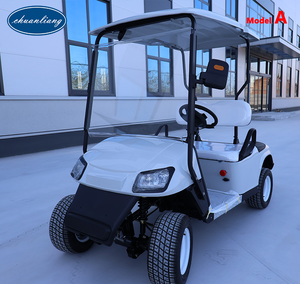
2-Passenger Executive
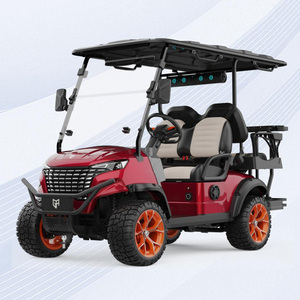
4-Passenger (2+2) Lifted LSV
6-Passenger (4+2) Resort Shuttle
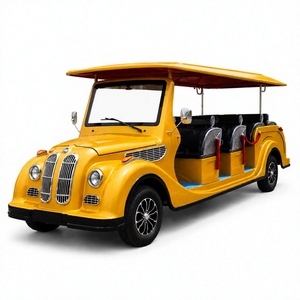
8-Passenger Commercial Bus
Nominal Motor Power
3.5kW - 5.0kW AC Synchronous
5.0kW - 7.5kW High-Torque AC
7.5kW Heavy-Duty AC Vector
7.5kW - 10kW PMSM Dual-Drive
Battery Chemistry
48V 100Ah LiFePO4 (BMS Integrated)
48V / 72V 105Ah - 150Ah Lithium
72V 160Ah - 200Ah LiFePO4
72V / 96V 230Ah Heavy Lithium
Controller Tech
Curtis / Enpower 350A Vector
Curtis / Sevcon 450A Vector
Enpower / Curtis 550A High Output
Automotive Grade CAN-Bus MCU
Max Top Speed
25 km/h - 40 km/h
30 km/h - 50 km/h (Configurable)
25 km/h - 35 km/h (Fleet Limited)
25 km/h - 30 km/h (Regulated)
Ground Clearance
120mm - 140mm
190mm Extra High Clearance
150mm Standard Commercial
160mm Heavy Load Clearance
Braking System
Rear Mechanical Hydraulic Disc
4-Wheel Hydraulic Disc + EM Brake
4-Wheel Hydraulic Disc + Auto-Park
Dual-Circuit Hydraulic Vacuum Disc
VIN Registration
ISO 3779 Standard 17-Digit
ISO 3779 / FMVSS 500 LSV
Commercial VIN Fleet Traceable
DOT / EEC Homologated VIN
3. Industry Development Trends in Passenger Buggy Manufacturing
The manufacturing landscape for low-speed electric vehicles in China is undergoing continuous technical evolution. Fleet purchasers who understand these technological shifts gain a significant long-term operational advantage.
1. High-Voltage Architecture (72V/96V Systems)
While legacy golf carts relied on 48V flooded lead-acid batteries, the industry has aggressively transitioned to 72V and 96V High-Efficiency Lithium Iron Phosphate (LiFePO4) systems. Higher voltage architectures significantly reduce current draw (amperage) for the same watt output, resulting in lower thermal stress across wiring harnesses, extended motor lifespan, and superior gradeability when climbing steep resort inclines with a full passenger payload.
Modern Chinese factories are embedding IoT telematics modules directly into the vehicle's controller network. Fleet operators can remotely monitor battery state-of-charge (SOC), cell voltage balance, real-time GPS positioning, geo-fencing restrictions, and preventative maintenance error codes via centralized cloud dashboards. This digital transformation turns basic passenger buggies into intelligent fleet assets.
Coastal resorts, beachfront hotels, and tropical island destinations represent major deployment markets where saltwater rust quickly degrades traditional steel frames. Tier-1 Chinese suppliers now utilize hot-dip galvanized steel ladder frames combined with extruded aluminum alloy sub-frames and injection-molded PP/ABS body panels. This structural design extends structural durability to over 10 years even in harsh marine environments.
Strategic procurement of electric passenger buggies requires analyzing Total Cost of Ownership (TCO) rather than focusing solely on upfront FOB price tags. B2B buyers should leverage the following procurement strategies when negotiating contract terms with Chinese OEMs:
Standardization of Component Ecosystems: Specify fleet-wide component commonality across 2-passenger, 4-passenger, and 6-passenger vehicles. Utilizing uniform motor controllers (e.g., Curtis 1232SE), identical brake pads, standardized LED light assemblies, and universal charging ports significantly reduces spare parts holding costs and simplifies maintenance technician training.
SKD vs. CKD Logistics Strategy: For high-volume overseas distributors, importing vehicles in Semi-Knocked-Down (SKD) or Completely Knocked-Down (CKD) format optimizes ocean freight container utilization. A standard 40ft High Cube (40HQ) container holds approximately 4 units of fully assembled 8-seater buggies, but can accommodate up to 12 to 16 units in CKD/SKD configuration, cutting per-unit freight charges by up to 60%.
Direct OEM Customization (White-Labeling): Top-tier factories offer extensive factory-installed customization options, including custom color matching (RAL codes), embroidered leather upholstery, branded steering wheel inserts, solar panel auxiliary charging roofs, and specialized heavy-duty cargo box attachments.
What is the distinction between a standard golf cart and a street-legal Low-Speed Vehicle (LSV)?
A standard golf cart is engineered primarily for off-highway golf course use, restricted to speeds around 15 mph (24 km/h), and often lacks essential safety equipment. A Low-Speed Vehicle (LSV) is a federally regulated vehicle category capable of speeds between 20 to 25 mph (32 to 40 km/h). LSVs require manufacturer-assigned 17-digit VINs, DOT-certified windshields, seat belts, turn signals, mirrors, horn, and reflective markers, permitting registration and operation on public roads posted at 35 mph (55 km/h) or less.
Why is a 17-Digit Manufacturer-Assigned VIN critical for import clearance?
A 17-digit ISO 3779 compliant Vehicle Identification Number (VIN) issued under a registered World Manufacturer Identifier (WMI) proves that the buggy was manufactured by an accredited vehicle factory. Customs authorities, DMVs, and commercial insurance providers require a valid VIN to clear customs, issue vehicle titles, license plates, and operational insurance policies. Vehicles without proper VIN documentation risk seizure at port or restriction to private land use.
What are the practical advantages of Lithium LiFePO4 over Lead-Acid batteries in commercial fleets?
Lithium Iron Phosphate (LiFePO4) offers over 3,500 to 5,000 charge cycles compared to just 500-800 cycles for flooded lead-acid batteries. LiFePO4 batteries are maintenance-free (no water topping), weigh 60% less (improving vehicle range and reducing tire/brake wear), support opportunity fast-charging without memory effect, and maintain consistent voltage delivery throughout the discharge cycle.
How do factories test frame durability and ground clearance for rugged terrain?
Tier-1 Chinese factories run automated chassis bump-track testing, dynamic incline braking trials, and salt-spray corrosion chamber tests (typically 500 to 1,000 hours). Models designed with extra ground clearance (such as 190mm lifted configurations) feature heavy-duty independent double A-arm front suspensions, hydraulic shock absorbers, and reinforced rear axle housings to navigate unpaved resort tracks and rugged terrain without bottoming out.
What is the typical lead time for OEM/ODM factory production orders?
Standard OEM production lead times range from 15 to 25 calendar days following receipt of deposit and technical specification sign-off. Customized white-label builds involving custom powder-coating, bespoke upholstery, or unique electrical configurations typically require 30 to 40 days.
Ready to Source High-Performance Passenger Buggies Direct from the Factory?
Connect directly with our engineering team for factory pricing, technical build sheets, WMI/VIN documentation, and OEM dealership territories.