Direct factory supply featuring 17-digit VIN capabilities, heavy-load chassis design, and customizable voltage platforms for worldwide distribution.
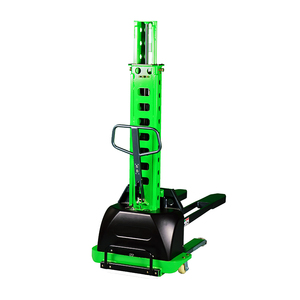
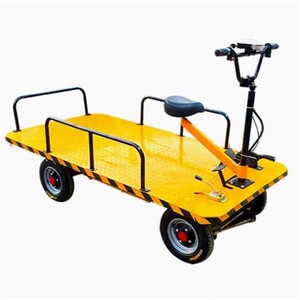
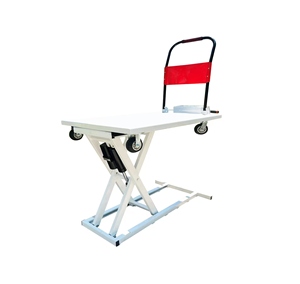
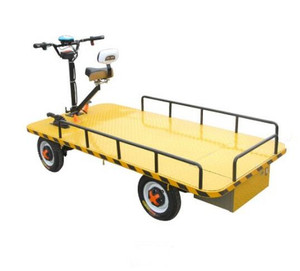

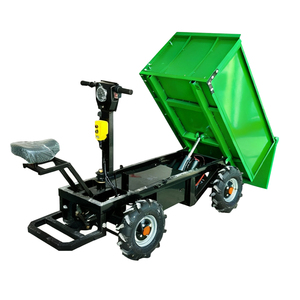
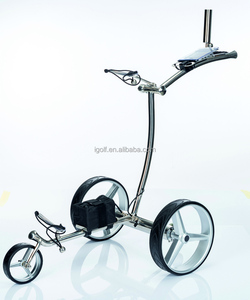
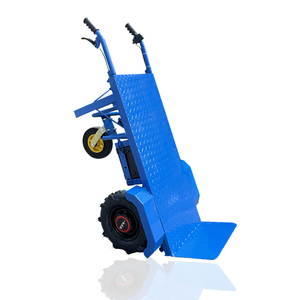
The global market for electric utility vehicles, low-speed vehicles (LSVs), and commercial electric trolleys has undergone a structural transformation over the last decade. Historically viewed as basic off-road golf buggies or rudimentary warehouse hand trucks, modern luxury carts and industrial motorized platforms manufactured in China are now engineered to comply with rigorous international automotive standards. Sourcing managers and B2B distributors seeking high-margin, street-legal, and heavy-duty utility fleets must navigate a complex ecosystem of original equipment manufacturers (OEMs), assembly factories, and trading intermediaries.
Understanding the distinction between an uncertified off-road assembly cart and a legitimate registered OEM manufacturer is the cornerstone of successful procurement. Advanced Chinese manufacturing facilities have migrated toward fully integrated production lines utilizing robotic Metal Inert Gas (MIG) welding, Cathodic Electrocoating (KTL dip tank processing for rust prevention), and automotive-grade assembly controls. By adopting international frameworks such as ISO9001 quality management, CE electrical certification, and US DOT/FMVSS 500 low-speed vehicle compliance standards, leading Chinese factories produce platforms capable of operating reliably across master-planned residential communities, luxury resorts, municipal campuses, and heavy logistics facilities.
Crucial Procurement Insight: The defining benchmark separating premium OEM factories from secondary assemblers is the ability to issue a legitimate, manufacturer-assigned 17-digit Vehicle Identification Number (VIN) tied to a registered World Manufacturer Identifier (WMI). Without this, commercial electric LSVs cannot be legally registered, titled, or insured for public road use in key North American and European jurisdictions.
Furthermore, the convergence of material handling technology and electric passenger mobility has led to significant engineering cross-pollination. High-efficiency brushless AC motors, programmable Curtis and Sevcon controllers, and automotive lithium iron phosphate (LiFePO4) battery management systems (BMS) are now standardized across both 1.5-ton material handling pallet jacks and 6-passenger resort shuttles. This commonality of core electrical architecture dramatically lowers total cost of ownership (TCO) for fleet operators while simplifying spare parts sourcing and field technician training.
As commercial buyers evaluate supply chain contracts for 2026 and beyond, four key technical trends are reshaping how Chinese electric cart factories design, price, and export their products:
While flooded and AGM lead-acid batteries once dominated the low-speed utility vehicle sector due to low upfront costs, the market has shifted decisively toward Lithium Iron Phosphate (LiFePO4) technology. Premier OEM factories in China now build dedicated battery compartments optimized for 48V, 72V, and 96V LiFePO4 configurations equipped with active CAN-bus BMS. These systems offer up to 4,000 deep discharge cycles, 60% weight reduction, zero off-gas maintenance, and fast-charging capabilities (0 to 80% charge in under 2 hours), making them imperative for multi-shift resort shuttles and intensive warehouse operations.
Corrosion resistance is a paramount operational requirement, particularly for carts deployed in coastal resorts, tropical golf courses, or industrial plants exposed to chemical agents. Leading luxury cart manufacturers are abandoning traditional mild steel box-section frames in favor of high-strength extruded aluminum alloy profiles or automotive-grade steel treated with cathodic electrophoretic coating (KTL). This structural innovation eliminates internal frame rusting, doubles operational lifespans, and reduces overall vehicle curb weight to enhance driving range.
Commercial fleet buyers are demanding connected vehicle infrastructure directly from the factory line. Modern Chinese manufacturing lines now integrate 4G/GPS telematics modules that transmit real-time diagnostic data to cloud platforms. Fleet administrators can monitor state-of-charge (SoC), track vehicle location via geofencing, monitor driver speed performance, and receive predictive maintenance alerts regarding brake pad wear or thermal anomalies within battery cells.
Regulatory bodies worldwide are enforcing stricter safety standards on neighborhood electric vehicles (NEVs) and LSVs. Sourcing managers must ensure that imported vehicles feature complete DOT-compliant lighting packages (LED headlights with high/low beams, sequential turn signals, high-mount brake lamps), automotive safety glass windshields with electric wipers, three-point seat belts, dual side mirrors, and four-wheel hydraulic disc brakes with regenerative braking assistance.
When selecting a manufacturing partner in China, B2B sourcing agents must evaluate factory capabilities against rigorous technical parameters. Below is a comparative baseline illustrating the operational gap between tier-one OEM manufacturers and generic tier-three assembly shops:
| Evaluation Parameter | Tier-1 OEM Manufacturing Facility | Generic Assembly Trading House |
|---|---|---|
| VIN & WMI Authority | Factory-assigned 17-digit VIN with official SAE/WMI registration. | No WMI identifier; unable to issue valid legal VINs. |
| Chassis Fabrication | Robotic MIG welding, aluminum extrusions, KTL anti-corrosion dip. | Manual arc welding on untreated carbon steel tubing. |
| Electrical Drivetrain | Integrated Curtis/Sevcon AC controller with LiFePO4 CAN-bus BMS. | Unbranded DC motor controllers with generic lead-acid wiring. |
| Braking Architecture | 4-Wheel Hydraulic Disc Brakes + Electromagnetic Parking Brake. | Rear-wheel mechanical drum brakes only. |
| Environmental Rating | IP67 rating on motor, controller, wiring harness, and battery box. | Unrated wiring vulnerable to water ingress and short circuits. |
| Quality Control (QC) | Laser wheel alignment, rain testing chamber, dynamic hill-climb test track. | Visual inspection only; no functional road testing. |
To ensure high standards of manufacturing excellence, export-focused factories adhere to strict Quality Assurance (QA) and Quality Control (QC) protocols throughout the production lifecycle. Understanding these internal engineering checkpoints provides procurement teams with full transparency during audit procedures:
Incoming Quality Control (IQC) procedures inspect 100% of critical structural components. Steel tubing undergoes ultrasonic wall-thickness measurement and tensile strength testing. Electrical components—including wiring harnesses, DC-DC converters, and dashboard displays—must pass environmental stress screening (-20°C to 65°C thermal cycling) prior to reaching the main assembly line.
Chassis frames are positioned in automated rotational jigs where six-axis robotic arms execute precision MIG welds. This guarantees structural repeatability within 0.5mm tolerances. Following fabrication, frames are subjected to a 14-stage pretreatment dipping process, culminating in cathodic electrodeposition. This creates an impermeable 25-micron protective coating capable of enduring over 1,000 hours of salt spray testing (ASTM B117 compliant).
During main-line assembly, platforms can be configured to specific buyer requirements. Drivetrain options range from 4kW eco-drives for flat residential terrain to 7.5kW/10kW high-torque motors paired with 350A controllers for steep resort gradeability (up to 30% incline performance). Interior customization includes custom-molded marine-grade vinyl upholstery, ergonomic steering wheels, digital LCD instrumentation clusters, and multi-speaker Bluetooth audio systems.
Before container loading, every completed vehicle undergoes comprehensive testing on dedicated factory tracks:
Whether you are establishing a regional dealership network, procuring commercial resort fleets, or sourcing heavy-duty industrial material handling carts, our engineering team provides full OEM support from initial CAD drawings to final VIN generation and container loading.
