Engineered for high-frequency passenger transport, terminal logistics, baggage handling, and maintenance operations. Built under rigorous ISO 9001 and ISO 3780 (WMI) automotive standards.
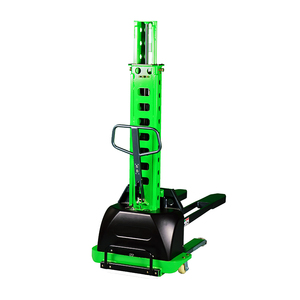
Heavy-duty ground support cargo jack designed for high-density airport baggage handling, air freight pallet maneuvering, and warehouse apron logistics.
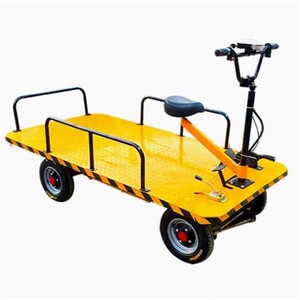
Commercial grade 4-wheel electric flatbed cargo cart optimized for apron baggage transfer, maintenance tool hauling, and multi-terminal equipment shuttling.
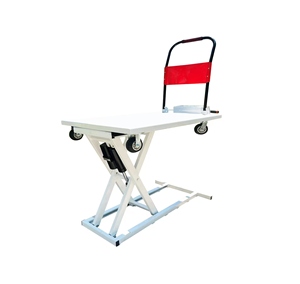
Precision hydraulic lifting platform cart for airport technical maintenance teams, aircraft component servicing, and heavy freight height-matched loading.
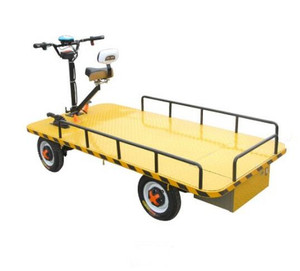
Operator-rideable high-speed platform shuttle designed for long-distance transit across expansive airport concourses, cargo bays, and logistics centers.
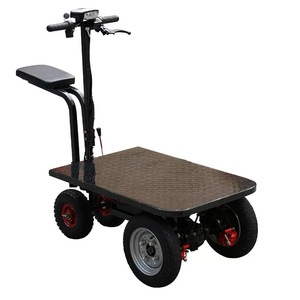
Compact foldable electric platform cart tailored for inside-terminal operations, duty-free retail inventory restocking, and passenger luggage dispatch.
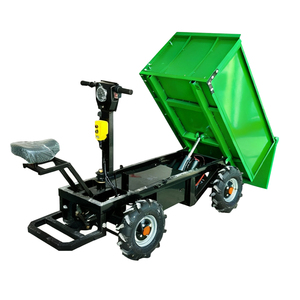
Self-unloading electric mini dumper specialized for airport groundskeeping, runway debris clearance (FOD prevention), and municipal waste collection.
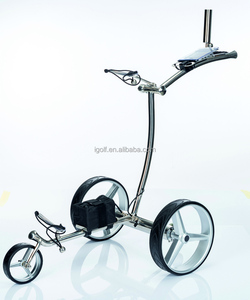
Premium personal mobility and passenger shuttle cart designed for VIP gate transit, executive terminal lounges, and golf resort connection services.
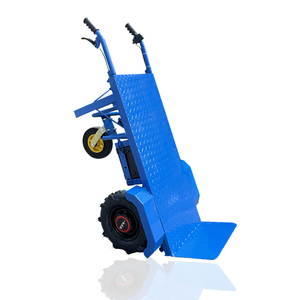
Revolutionary stair-climbing electric cart for multi-level airport terminals, jet bridge maintenance, and heavy cargo transit across step barriers.
In the era of modern aviation ground operations, airport shuttle vehicles and apron platform carts are no longer categorized as basic utility transport. They form the backbone of Ground Support Equipment (GSE) and terminal mobility ecosystems. Leading Chinese manufacturers are driving a massive transformation in this sector by shifting from low-cost assembly to high-precision automotive OEM/ODM manufacturing. Key to this evolution is strict compliance with international manufacturing frameworks, including ISO 9001 quality systems, ISO 3780 World Manufacturer Identifier (WMI) registration, and the assignment of standardized 17-digit Vehicle Identification Numbers (VIN).
A primary competitive advantage of top-tier Chinese airport shuttle factories lies in their integrated chassis engineering. Built upon high-tensile carbon steel or lightweight structural aluminum alloys, these platforms undergo rigorous finite element analysis (FEA) to withstand high-frequency operating cycles. Unlike retrofitted golf carts or light commercial utility vehicles, specialized airport shuttle platforms are designed to sustain continuous 24/7 multi-shift operations in harsh outdoor apron environments, enduring extreme ambient temperatures ranging from -20°C to +50°C.
Information Gain Benchmark: OEM-level factories issue official 17-digit VIN identifiers tied to international WMI registries. This guarantees complete component traceability, compliance with U.S. Federal Motor Vehicle Safety Standards (FMVSS 571.500 for Low-Speed Vehicles), EEC/CE certifications in Europe, and seamless vehicle titling for public road or airport perimeter access.
Equipped with DOT-compliant automotive safety glass windshields, three-point inertia seatbelts, dual-circuit hydraulic disc brakes, high-output LED lighting packages, and side-view mirrors designed to meet strict international street-legal criteria.
Utilizing high-density Lithium Iron Phosphate (LiFePO4) battery packs managed by intelligent CAN-bus Automotive Battery Management Systems (BMS). Features thermal run-away protection, rapid 1-hour fast charging capabilities, and over 4,000 to 5,000 deep discharge cycles.
Procurement directors and airport fleet managers worldwide are navigating a profound shift toward Net-Zero Aviation Ground Operations. According to global aviation decarbonization mandates, major international hub airports are targeting 100% electrification of their airside and landside light ground transport fleets by 2030. Consequently, procurement strategies are undergoing four major paradigm shifts:
While internal combustion engine (ICE) or lead-acid powered shuttles formerly held a CapEx advantage, modern electric LiFePO4 shuttle fleets reduce total operating expenditure (OpEx) by up to 68% over a 7-year lifecycle due to minimal maintenance and zero fuel consumption.
Next-generation airport shuttle contracts demand built-in IoT gateways supporting real-time GPS tracking, battery state-of-health (SoH) diagnostics, remote speed limiting, geofencing, and automated maintenance alerting via cloud API integrations.
Airports are increasingly procuring modular chassis architectures. A single base frame can be rapidly converted from a 6-passenger VIP shuttle to a luggage flatbed or maintenance dolly, dramatically simplifying spare parts warehousing.
Leading Chinese OEM suppliers are integrating drive-by-wire steering and electronic braking systems (EBS) compatible with Autonomous Guided Vehicle (AGV) algorithms for automated baggage transport and fixed-route concourse passenger shuttling.
| Evaluation Metric | Legacy ICE / Gas Shuttles | Lead-Acid Electric Carts | Next-Gen Chinese LiFePO4 LSVs |
|---|---|---|---|
| Energy Efficiency | Low (15-20% thermal efficiency) | Moderate (65-70% charging ratio) | Ultra-High (92-96% efficiency) |
| Battery Service Life | N/A (Fuel Dependent) | 1.5 - 2.5 Years (500 Cycles) | 8 - 10+ Years (4,000+ Cycles) |
| Fast Charging Capability | N/A (5-min Refuel) | 8 - 10 Hours (Slow Charge) | 1 - 2 Hours (Opportunity Charge) |
| Regulatory Compliance | High Noise & Tailpipe Emissions | Off-Road / Restricted Speed | FMVSS 571.500 / CE / VIN Titling |
| Maintenance Overhead | High (Oil, Filters, Spark Plugs) | Moderate (Watering, Corrosion) | Ultra-Low (Solid State / BMS) |
| Telematics Integration | Rare / Retrofitted | Basic Analog Metering | Native CAN-Bus & IoT Remote API |
Engineering innovation within top Chinese electric vehicle factories is accelerating rapidly to keep pace with modern smart-airport demands. When auditing prospective suppliers, global engineering buyers should look for three core technical advancements:
A. Advanced Powertrain Optimization & Regenerative Braking: Modern airport shuttles utilize high-efficiency AC induction or Permanent Magnet Synchronous Motors (PMSM) paired with intelligent regenerative braking controllers. On steep jet bridge ramps or continuous concourse stop-and-go routines, regenerative braking recaptures up to 22% of kinetic energy, extending operational range per charge while drastically cutting brake pad wear.
B. Corrosion-Resistant Automotive Dip Coating (E-Coating): Airport aprons exposed to coastal environments, de-icing chemicals, and high humidity require superior surface protection. Leading suppliers employ Cathodic Electrodeposition (KTL E-coating) combined with powder coating on all structural steel frames, ensuring over 1,500 hours of salt-spray resistance without red rust formation.
C. Universal Component Standardization: To reduce supply chain friction for global distributors, tier-one factories design 2-passenger, 4-passenger, 6-passenger, and heavy flatbed cargo carts around identical control modules, steering racks, suspension arms, and lighting clusters. This allows fleet operators to maintain an ultra-lean spare parts inventory.
A standard golf cart is designed for off-road or golf course environments with top speeds limited to ~15 mph (24 km/h), often lacking automotive safety features. In contrast, an Airport Low-Speed Vehicle (LSV) is a federally compliant vehicle category capable of speeds up to 25 mph (40 km/h). LSVs feature a 17-digit manufacturer-assigned VIN, DOT-approved safety glass, seatbelts, automotive LED headlights, turn signals, mirrors, and dual-circuit braking, enabling them to operate legally on public access roads and airport perimeters.
Yes. Premium OEM manufacturers registered with the International Organization for Standardization (ISO 3780) possess a unique World Manufacturer Identifier (WMI). Every LSV produced carries an official 17-digit VIN stamped directly onto the chassis frame and marked on the vehicle specification plate, ensuring seamless customs clearance, state titling, registration, and insurance coverage.
LiFePO4 is the safest, most thermal-stable lithium chemistry available for commercial electric vehicles. Equipped with an integrated smart Battery Management System (BMS) and optional internal heating films, these battery systems operate reliably across -20°C to +60°C (-4°F to 140°F) environments without risk of thermal runaway, making them ideal for tarmac deployment in all global climates.
Absolutely. Leading factories offer extensive OEM/ODM customization options including custom Pantone color matching, corporate logo silkscreening, customized seating configurations (2, 4, 6, 8, or 14 seats), enclosed weather-proof doors, wheelchair ramps, beacon lights, and direct CAN-bus hardware integration for proprietary fleet telematics.
Tier-one Chinese suppliers typically offer a 3-year to 5-year warranty on the lithium battery pack, motor, and controller, along with a lifetime warranty on the chassis frame. Spare parts are supported through standardized component architecture, international express logistics, and dedicated technical service portals.
