A Premium Electric Golf Cart offers more than quiet movement across a course, resort, campus, or private community. It combines refined design, responsive handling, and cleaner electric performance. For experienced owners, the difference often appears in small details. The steering feels controlled on uneven paths. The suspension reduces jolts near curbs. Quality seats remain comfortable after several hours of use. These features can make daily transportation feel safer and less tiring.
Performance matters, but reliability matters more. A well-built Premium Electric Golf Cart usually includes a stronger frame, efficient motors, improved braking systems, and better battery management. Lithium batteries may provide quicker charging and more consistent power, although their higher purchase price requires careful planning. Check the warranty. Review service access. Ask about replacement parts. A polished display cannot replace dependable support.
That trade-off deserves attention.
Premium models are not automatically the best choice for every buyer. A basic cart may suit occasional short trips, while a premium model can better serve frequent users and commercial operators. Experienced dealers can help match battery capacity, seating, ground clearance, and charger specifications to real needs. Owners should also follow local operating rules and maintain lights, tires, brakes, and batteries regularly. Neglect becomes expensive.
The strongest reason to choose premium equipment is confidence over time. It should start smoothly on a cool morning, climb a gentle slope without hesitation, and remain stable when carrying passengers. Still, expectations must stay realistic. No electric cart eliminates maintenance. Careful selection, documented service, and honest evaluation create the real value behind a premium purchase.
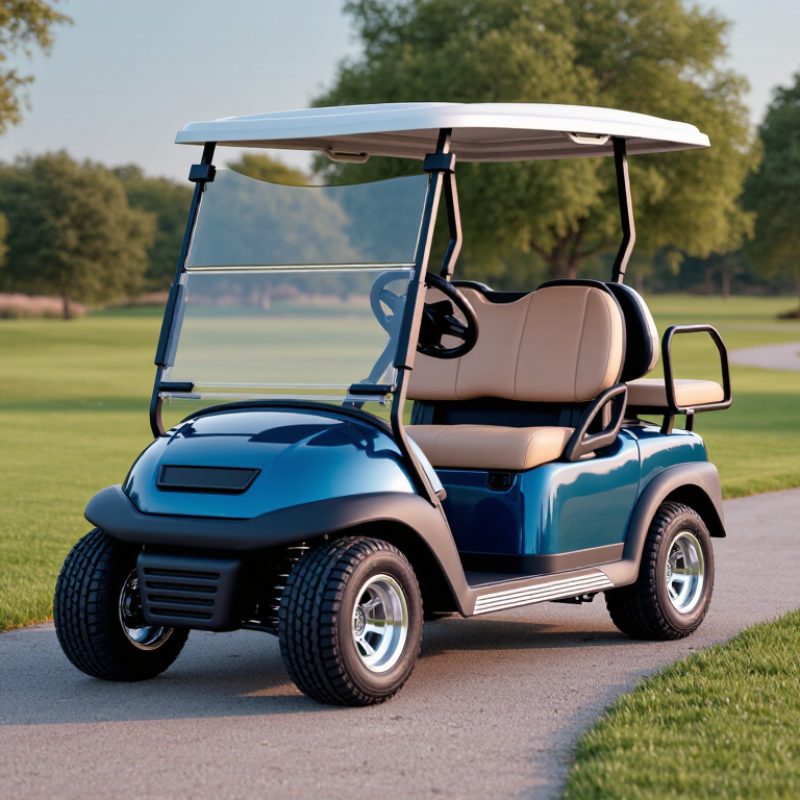
Why Choose a Premium Electric Golf Cart?
What Defines a Premium Electric Golf Cart?
A premium electric golf cart is not simply a faster cart with stitched seats. It combines efficient power delivery, controlled handling, quiet operation, and dependable daily use. The U.S. Department of Energy reports that electric vehicles convert roughly 77–82% of grid energy into wheel power. Gasoline vehicles typically achieve only 12–30%. This broader EV data shows why motor efficiency matters, even on short golf-course routes.
Battery quality defines much of the ownership experience. BloombergNEF’s 2024 Battery Price Survey recorded an average lithium-ion pack price of $115 per kilowatt-hour. Lower prices can help, but premium design should prioritize cell consistency, thermal protection, battery monitoring, and safe charging. A larger battery is not always better. It may add weight, reduce efficiency, and increase replacement costs. Range claims also need context. Hills, passengers, cargo, tire pressure, and temperature can change real results.
Ride quality matters. Premium carts should offer stable suspension, predictable braking, durable lighting, weather-resistant wiring, and comfortable seating that supports long use. Independent testing and clear service records are more convincing than polished advertising. I would question any specification without test conditions. The weak point is often charging discipline. Users may also overlook tire maintenance, software updates, or battery inspection. A premium electric golf cart earns its price through consistent performance, transparent support, and fewer unpleasant surprises.
| Dimension | What Defines a Premium Electric Golf Cart? | Typical Premium Specification | Practical Benefit |
|---|---|---|---|
| Battery Technology | A high-quality lithium-ion battery system with an integrated battery management system (BMS), rather than a basic lead-acid configuration. | Lithium-ion; commonly 48–72 V | Lower weight, more consistent power delivery, faster charging, and no routine watering requirement. |
| Driving Range | A battery and drivetrain designed to support longer daily use under normal passenger, terrain, and speed conditions. | Approximately 40–80 miles per charge | More usable distance between charges for golf courses, resorts, communities, and private properties. |
| Motor and Controller | A purpose-matched electric motor and controller that provide smooth acceleration, efficient operation, and controlled performance on inclines. | Typically 5–15 kW peak output | Quieter operation, better hill-climbing capability, and more predictable response at different loads. |
| Charging System | An automatic charger with protections for over-voltage, over-current, overheating, and battery overcharging. | Commonly 3–8 hours for a full charge | Safer overnight charging, improved battery protection, and less need for manual monitoring. |
| Ride Comfort | A refined suspension system, supportive seating, adequate legroom, and reduced vibration and road noise. | Independent or upgraded front suspension; adjustable features may be available | A smoother ride over uneven paths and greater comfort during extended use. |
| Braking and Safety | A dependable braking system combined with seat belts, lighting, mirrors, a horn, and stability-focused chassis design. | Four-wheel braking; regenerative braking may be included | Improved stopping control, visibility, and passenger protection in varied operating conditions. |
| Build Quality | A rigid frame, corrosion-resistant materials, durable body panels, sealed electrical connections, and carefully finished components. | Powder-coated or treated metal frame; weather-resistant electrical components | Better durability in humid, coastal, dusty, or frequently used environments. |
| Passenger and Cargo Capacity | A layout engineered for stable weight distribution, practical seating, and useful cargo space without compromising handling. | Typically 2–6 passengers, depending on configuration | Greater flexibility for transportation, recreation, property maintenance, and utility work. |
| Energy Efficiency | Efficient motor control, low rolling resistance, and regenerative features where supported by the drivetrain. | Electric drivetrain efficiency commonly exceeds internal-combustion alternatives for low-speed use | Lower energy consumption and reduced operating costs for frequent short-distance travel. |
| Maintenance Requirements | A design with fewer wear-prone mechanical parts and accessible service points for batteries, brakes, tires, and suspension. | No engine oil, spark plugs, or exhaust-system service | Simpler routine maintenance and less downtime than a comparable gasoline-powered cart. |
| Noise and Emissions | A quiet electric drivetrain that produces no tailpipe emissions during operation. | Zero tailpipe emissions while driving | A more comfortable experience for passengers and less disturbance in residential, hospitality, and recreational settings. |
| Total Ownership Value | Higher-quality components and energy-efficient operation balanced against the initial purchase price. | Higher upfront cost; potentially lower running and maintenance costs | A stronger long-term proposition for owners who use the cart regularly and keep it for several years. |
It combines efficient power, stable handling, quiet operation, and dependable daily performance. Stitched seats alone prove little. Strong service records and tested specifications matter more than polished advertising.
A consistent lithium battery can maintain steadier power on hills, grass, and repeated starts. Its monitoring system checks temperature, charging, and cell balance. A larger battery is not always better because extra weight can reduce efficiency.
Range depends on hills, passengers, cargo, tire pressure, and temperature. Treat advertised figures carefully. A cart carrying four adults may travel differently from one carrying only a driver.
Strong suspension absorbs uneven pavement and compacted gravel more effectively. Adjustable shocks can reduce bouncing with passengers or equipment. Properly sized tires, a rigid frame, and reduced vibration also support longer rides.
Useful features include seat belts, bright lights, mirrors, turn signals, and a clear horn. Speed control can limit acceleration on narrow lanes or steep slopes. A parking brake sensor and charger interlock may prevent simple mistakes.
No. Regenerative braking may reduce brake wear, but regular inspections remain necessary. Brake response can change with maintenance conditions, passenger weight, and slopes.
A weather-resistant display can show speed, charge level, and warning messages. Maintenance alerts may help record fleet use. However, dirty sensors and software errors can produce misleading information.
No. Owners still need to check tire pressure, lights, cable connections, and battery condition. I once assumed expensive components prevented problems. Poor alignment can undermine them quickly.
A Premium Electric Golf Cart is defined by more than attractive styling. It combines a durable frame, efficient electric power system, high-quality suspension, comfortable seating, reliable braking, and carefully selected components designed for smooth, quiet, and consistent performance. Premium materials and thoughtful engineering can improve acceleration, handling, ride comfort, and overall durability, making every journey more enjoyable on the course, around a community, or across private property.
The best premium models also include practical safety and technology features, such as dependable lighting, seat belts, parking systems, intuitive controls, battery monitoring, and convenient charging solutions. Although the initial purchase price may be higher, stronger construction, efficient energy use, lower maintenance needs, and longer component life can reduce ownership costs over time. This type of cart is especially valuable for owners who prioritize comfort, reliability, daily usability, modern features, and long-term value rather than choosing solely based on the lowest upfront price.