0%

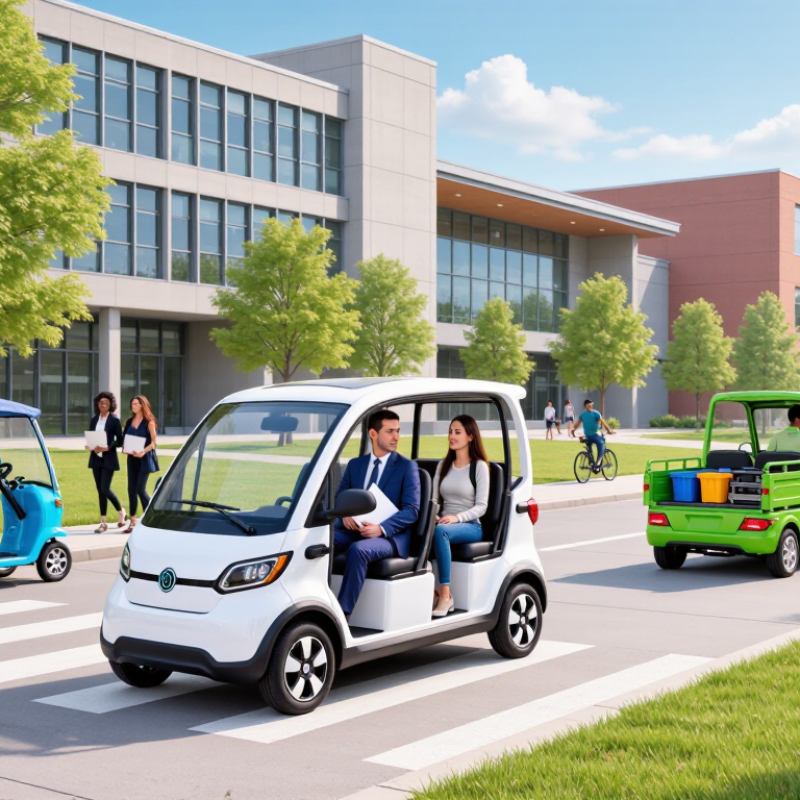
Campus Low-Speed Electric Vehicle adoption is moving beyond golf courses and private estates. Universities now need practical transport for students, staff, visitors, and maintenance teams. A vehicle may travel only 15 miles daily, yet repeat that journey hundreds of times each semester.

The International Energy Agency’s Global EV Outlook 2024 reports that global electric car sales exceeded 17 million in 2024. That figure does not measure campus fleets directly. Still, it signals stronger battery supply, wider charging access, and falling technology costs. The U.S. Department of Energy classifies low-speed vehicles as models designed for limited-speed environments, commonly reaching 20 to 25 mph. That range suits pedestrian-focused campuses, medical centers, resorts, and industrial sites.

Dr. Gil Tal, director of the Electric Vehicle Research Center at the University of California, Davis, has emphasized a practical principle: “The best vehicle is the one that fits the trip.” His point matters here. A compact four-seat vehicle can move quietly between lecture halls, while a utility model may carry tools, bins, or supplies across a large campus.

This guide compares leading options for global buyers. It considers range, charging time, payload, weather protection, service support, and total operating cost. Safety equipment and local certification also require careful review. The market remains uneven, and published sales data often combine neighborhood vehicles with campus models. That makes simple rankings imperfect. Real-world fit matters more than glossy specifications. Expect trade-offs. Expect surprises.

Top Campus Low-Speed Electric Vehicles for Global Buyers?

What Are Campus Low-Speed Electric Vehicles?

Campus low-speed electric vehicles are compact, battery-powered vehicles designed for short trips on campuses, resorts, hospitals, and private communities. They usually carry two to eight passengers and travel at modest speeds. Their quiet motors suit libraries, laboratories, and residential paths where noise matters.

These vehicles are not simply small cars. Their frames, braking systems, lighting, and seating layouts support controlled, local travel. Many include weather covers, rear storage, and charging displays. In daily use, I have found that rated range can feel optimistic. Cold weather, hills, passengers, and repeated stops reduce it quickly. Buyers should check local speed limits, road access rules, safety requirements, and charging standards before ordering. Regulations differ widely between countries and even between sites.

Tips: Measure the route, not just the vehicle. Test turning space, ramps, doorways, and loading areas. Ask for battery warranty terms and real-world range data. Keep charging equipment protected from rain. A small mistake in route planning can create a large operational problem. Some buyers also overlook driver training, because low speed can create false confidence. That deserves more attention.

For global buyers, the best choice depends on terrain, climate, passenger needs, and maintenance support. A vehicle used beside wet coastal buildings needs different protection from one operating on dry, flat grounds. Review service access carefully. Cheap ownership may not remain cheap without replacement parts, trained technicians, and reliable battery records.

Key Features and Specifications for Campus Travel

Campus travel demands compact, quiet, and dependable transportation. Low-speed electric vehicles suit short routes between lecture halls, residences, and parking areas. Typical models carry two to six passengers, depending on their layout. A practical driving range often falls between 50 and 100 kilometers per charge. Real distance varies with hills, passenger weight, temperature, and driving habits.

Look for a battery system with clear charging information and accessible service support. Charging may require four to eight hours, so overnight charging works well for most campuses. Useful features include LED lighting, adjustable seats, seat belts, mirrors, and a weather-resistant roof. A turning radius near four meters helps vehicles move through narrow pathways. Storage space matters too. A lockable compartment can hold tools, parcels, or small equipment. Safety should never be treated as an optional upgrade.

Build quality deserves close inspection. Check the frame, brakes, tires, wiring, and battery warranty before purchase. Buyers should also confirm local speed limits, access rules, and charging requirements. Regulations differ widely across countries and even between campuses. Do not trust range figures alone. Test the vehicle with realistic loads, repeated stops, and uneven pavement. Some models feel stable on smooth roads but less confident near ramps or wet surfaces. That weakness may not appear in a brochure. A careful evaluation should include maintenance costs, spare-part availability, and technician training. Reliability is practical, not just advertised.

How to Compare Safety, Range, Comfort, and Utility

Top Campus Low-Speed Electric Vehicles for Global Buyers?

How to Compare Safety, Range, Comfort, and Utility

Campus low-speed electric vehicles need more than attractive specifications. Safety should lead the comparison. Check seat-belt design, braking performance, lighting, mirrors, and stability on uneven paths. Ask for clear test records and maintenance guidance. Enclosed cabins can protect occupants from rain, but they may reduce visibility in crowded areas. Local road rules also differ, so buyers should verify permitted speeds, equipment, and operating zones before purchase.

Range figures often reflect ideal conditions. Real distance changes with hills, passenger weight, tire pressure, temperature, and frequent stops. A useful test includes a full passenger load and repeated starts near buildings. Keep a practical energy reserve instead of using the final battery percentage. Charging time matters too. A vehicle that travels far but waits many hours may disrupt campus transport. This is where advertised efficiency can disappoint.

Comfort and utility appear during ordinary work. Check step-in height, seat support, turning radius, cargo space, and control visibility. Measure whether a driver can load supplies without twisting awkwardly. Quiet operation helps near classrooms, yet warning sounds remain important around pedestrians. Fleet buyers should inspect service access, replacement parts, warranty terms, and technician training. No scorecard is perfect. Weather tests may be limited, and user habits can change results. A careful trial with staff, students, and maintenance teams often reveals problems that a brochure misses.

Best Vehicle Types for Universities and Large Campuses

Top Campus Low-Speed Electric Vehicles for Global Buyers

Universities need different vehicle types for different daily tasks. Electric shuttle buses work well on fixed routes between residence halls, libraries, and parking areas. Their low floors support wheelchair users and passengers carrying bags. Enclosed cabins also help during rain, snow, and intense sunlight.

Utility carts suit maintenance teams, security staff, and grounds crews. A compact cargo bed can carry tools, recycling bins, or replacement parts across narrow service roads. For admissions offices, small electric vans provide quiet transport for visitors and staff. They fit near lecture buildings without creating heavy traffic. Passenger carts are useful for short trips, but their seating layout should not reduce safe boarding space.

Campus buyers should check battery range under real conditions, not only laboratory figures. Hills, winter temperatures, frequent stops, and full passenger loads reduce usable distance. Charging equipment needs a protected location, clear access, and reliable electrical capacity. Maintenance teams also need simple parts access and training materials in the local language.

Speed limits and pedestrian zones require careful route planning. A vehicle that feels efficient on a test road may feel intrusive beside a crowded walkway. I have seen pilot programs underestimate turning space near dormitory entrances. That mistake is costly. A short trial during class changes can reveal noise, visibility, and congestion problems before a large purchase.

Global Buying, Compliance, Charging, and Maintenance Considerations

Top Campus Low-Speed Electric Vehicles for Global Buyers?

A campus vehicle must match its location, not just its brochure. Global buyers should verify speed limits, passenger capacity, lighting, braking, seat-belt, and road-access rules before importing. A vehicle accepted on private university roads may fail public-road certification. UNECE Regulation No. 100 sets battery safety requirements for certain road vehicles, but national adoption differs. Import duties, customs documents, and battery transport testing under UN 38.3 also require early review. Small details matter.

Charging needs a site survey. Check voltage, connector compatibility, earthing, residual-current protection, and daily driving distance. The International Energy Agency reported more than four million public charging points worldwide at the end of 2023, with charging infrastructure growing about 40% that year. Campus fleets still need private capacity. One shared outlet may create morning queues. Cold weather can reduce usable range, while shaded parking protects batteries in hot climates. Plan for winter.

Maintenance is usually simpler, but not maintenance-free. U.S. Department of Energy guidance highlights fewer moving parts in electric drivetrains, yet tires, brakes, suspension, coolant, and battery connectors still need inspection. Keep service records, diagnostic access, and critical spare parts locally. I would not promise identical performance across continents; dust, steep paths, humidity, and poor electrical quality change results. A pilot fleet of two or three vehicles can expose charging and repair problems before a larger purchase.

Top Campus Low-Speed Electric Vehicles for Global Buyers? - Global Buying, Compliance, Charging, and Maintenance Considerations
Evaluation Dimension Typical Campus EV Specification or Requirement Why It Matters to Global Buyers Compliance and Purchasing Considerations Charging and Maintenance Implications
Vehicle Classification Common campus vehicles include passenger shuttles, utility carts, maintenance vehicles, and small delivery vehicles designed for private roads or controlled-access sites. Vehicle classification determines whether the vehicle can operate only on campus property or also on public roads. Do not assume that a vehicle described as a “golf cart,” “campus cart,” or “low-speed EV” is road-legal in every country. Vehicles restricted to private property may have simpler equipment requirements but still need safe braking, lighting, guarding, and operator controls.
Operating Speed Typical campus operating speeds range from approximately 15 to 25 km/h. In the United States, a federally defined low-speed vehicle category uses a maximum speed of 20 to 25 mph, approximately 32 to 40 km/h, depending on the applicable definition. Lower speeds improve pedestrian safety, reduce energy consumption, and simplify traffic management. Local authorities may impose lower campus speed limits than the vehicle’s technical maximum. Public-road categories can require specific equipment and certification. Lower speeds generally reduce motor and brake wear, but frequent stop-and-go operation can increase energy use and tire wear.
Passenger Capacity Typical configurations carry 2 to 8 occupants. Larger shuttle bodies may provide additional seats but require stronger chassis, braking capacity, and accessibility planning. Capacity affects route efficiency, turning radius, curb weight, and total operating cost. Verify rated seating positions, passenger restraints, handholds, entry steps, and emergency-exit arrangements where required by local rules. Higher passenger loads increase tire pressure sensitivity, stopping distance, battery consumption, and suspension inspection requirements.
Payload and Utility Capacity Small utility models commonly support approximately 200 to 500 kg of combined cargo and occupants, subject to the manufacturer’s rated gross vehicle weight. Universities, resorts, hospitals, and industrial campuses often need both people-moving and material-handling capability. Never calculate payload from cargo-box size alone. Confirm the gross vehicle weight rating, axle ratings, towing rating, and gradient limits. Overloading increases brake temperature, tire stress, suspension damage, and battery current demand.
Battery Chemistry Lead-acid packs remain available for low initial cost. Lithium-ion packs generally offer lower weight, higher usable energy, and better opportunity-charging capability, subject to battery-management-system controls. Battery chemistry affects purchase price, vehicle weight, charging time, service life, and total cost of ownership. Confirm transport documentation, electrical protection, battery warranty terms, replacement availability, and end-of-life recycling arrangements. Lead-acid batteries require electrolyte, terminal, ventilation, and equalization-related attention where applicable. Lithium-ion batteries require diagnostic monitoring and protection against over-temperature and over-charge conditions.
Common System Voltage 48 V systems are common in small campus vehicles. Larger or higher-performance platforms may use approximately 60 to 72 V or other manufacturer-specific architectures. Voltage influences current, cable sizing, charger selection, service procedures, and electrical safety controls. Ensure the complete battery, charger, controller, fuse, connector, and wiring system is designed for the same nominal voltage and regional electrical supply. Technicians should isolate the battery pack before high-voltage service and follow the vehicle’s electrical lockout procedure.
Typical Driving Range Approximately 40 to 120 km per charge is common for small campus EVs, depending on battery energy, passenger load, terrain, weather, speed, and stop frequency. Actual route range is usually lower than laboratory or unloaded test figures. Request a route-based energy estimate using the campus’s daily distance, slopes, passenger load, and operating temperature. Plan charging around the duty cycle rather than relying only on the advertised maximum range. Cold temperatures can reduce available battery energy.
Charging Input Many small vehicles use single-phase AC charging. Charging power commonly falls in the approximate range of 1.5 to 7 kW, depending on the onboard charger and battery size. Charging power determines infrastructure cost, charging duration, and the number of vehicles that can be served simultaneously. Check local plug standards, supply voltage, frequency, protective devices, earthing, residual-current protection, and installation permits. A dedicated circuit is preferable. Avoid undersized extension cables, outdoor connections without suitable ingress protection, and mixed-voltage charging areas.
Charging Time A full charge commonly takes about 4 to 10 hours. Lithium-ion vehicles designed for higher-power charging may charge faster, while large lead-acid packs may require longer periods. Overnight charging is often sufficient for one-shift campus operations. Verify whether the charger automatically terminates or reduces current after reaching full charge and whether it is approved for the destination market. Use manufacturer-approved charging profiles. Repeatedly interrupting charging or using an incompatible charger can reduce battery life or create a safety hazard.
Charging Standards and Connectors Small campus EVs may use dedicated low-power connectors rather than public fast-charging interfaces. Larger road-capable vehicles may use regional AC charging systems. Connector compatibility affects fleet flexibility and replacement-vehicle procurement. Confirm connector pinout, pilot communication, voltage rating, ingress protection, and regional electrical certification before importing. Install cable management, weather protection, access control, and visible charging-status indicators to reduce connector damage and trip hazards.
Public-Road Compliance Road legality may require lighting, reflectors, mirrors, windscreen equipment, seat belts, turn signals, warning devices, parking brakes, identification plates, and approved tires. A vehicle suitable for private campus roads may not satisfy national type-approval or registration rules. Confirm the destination country’s vehicle category, type approval, registration, insurance, driving-licence, inspection, and emissions or noise requirements before purchase. Road-registered vehicles require stricter documentation and scheduled inspections than vehicles used solely inside controlled premises.
European Vehicle Categories Some small road vehicles may fall within European L-category classifications. For example, L6e and L7e categories have distinct limits for speed, power, mass, and equipment. Correct category selection affects approval route, safety equipment, registration, and permitted operating areas. Category limits and national implementation must be checked against the exact vehicle configuration; a campus-use description does not replace formal approval. Keep the conformity documentation, identification plate, technical file, and maintenance records aligned with the approved configuration.
United States Low-Speed Vehicle Considerations Where the federal low-speed vehicle category applies, vehicles are generally designed for speeds above 20 mph and not exceeding 25 mph, with specified safety equipment. Federal requirements do not eliminate state, municipal, campus, road-access, insurance, or registration requirements. Check applicable federal equipment rules and the destination state or local authority before operating on public roads. Campus fleet operators should document daily pre-use inspections and maintain safety equipment in its approved condition.
Safety Equipment Recommended equipment includes seat belts, hydraulic or mechanical service brakes, parking brake, headlights, tail lamps, brake lamps, turn signals, mirrors, horn, reflectors, and reversing warning devices where appropriate. Pedestrian-heavy campuses require strong visibility and predictable vehicle behavior. Equipment requirements vary by use location and legal classification. Safety equipment should not be removed for appearance or convenience. Inspect lamps, belts, mirrors, brake operation, tire condition, and warning devices before each operating shift.
Accessibility Accessible configurations may include low-entry steps, handrails, wheelchair spaces, ramps or lifts, priority seating, and securement systems. Accessible transport is important for educational, healthcare, public-service, and visitor-facing campuses. Check local accessibility legislation, route clearance, ramp slope, door width, turning space, and securement requirements. Ramps, lifts, restraints, and handrails need frequent functional checks and cleaning in high-use environments.
Terrain and Gradeability Many campus EVs are intended for paved surfaces and moderate gradients. Actual grade capability depends on motor torque, battery voltage, load, tire grip, and thermal management. Steep roads, ramps, wet surfaces, and uneven pathways can reduce range and braking performance. Obtain a tested gradeability figure at the intended payload, not only an unloaded promotional value. Inspect brakes, tires, suspension, and motor-temperature protection more frequently on hilly routes.
Weather and Environmental Protection Outdoor campus vehicles should have suitable protection against rain, dust, ultraviolet exposure, and temperature variation. Protection levels vary by component. Climate affects battery performance, corrosion, visibility, and electronic reliability. Verify ingress-protection ratings for charging equipment and electrical enclosures, especially in wet or dusty locations. Keep charging connectors dry, wash salt and chemical residue from the chassis, and inspect seals and corrosion-prone fasteners.
Routine Maintenance Typical tasks include tire inspection, brake inspection, steering and suspension checks, fastener checks, lamp testing, battery diagnostics, and charger inspection. Preventive maintenance reduces downtime and helps maintain safe stopping and handling performance. Use a maintenance schedule based on operating hours, distance, climate, and duty severity rather than calendar time alone. Daily operator checks should be combined with periodic technician inspections and documented corrective actions.
Battery Service Life Service life varies widely. Lead-acid packs may require replacement after several hundred to roughly 1,500 deep cycles, while lithium-ion packs can often achieve more cycles when temperature and charging are controlled. Battery replacement is one of the largest long-term fleet costs. Compare warranty coverage by years, energy throughput, cycle count, retained capacity, and permitted operating conditions. Avoid prolonged storage at very low state of charge. Follow the specified storage state of charge and temperature limits.
Spare Parts and Local Support Critical parts include brake components, tires, chargers, controllers, contactors, displays, suspension parts, body panels, and battery modules. Import savings can disappear if parts take weeks to arrive or require specialist tools. Require a parts list, service manuals, diagnostic access, warranty process, and local technical support before signing a purchase contract. Keep common wear parts and at least one compatible charger or approved charging solution available for fleet continuity.
Total Cost of Ownership Evaluate purchase price, shipping, import duties, registration, charging infrastructure, electricity, tires, brakes, batteries, insurance, labor, downtime, and end-of-life handling. The lowest purchase price may not produce the lowest lifetime cost. Compare vehicles using the same duty cycle, payload, annual distance, energy price, and replacement assumptions. Track energy consumption, maintenance hours, battery health, repair frequency, and vehicle availability by unit.
Recommended Buyer Documentation Request a technical specification sheet, rated weights, dimensions, battery details, charger manual, wiring diagram, conformity documents, warranty terms, parts list, and maintenance schedule. Complete documentation reduces customs, compliance, service, and resale risks. Match the documents to the exact vehicle configuration, battery pack, charger, and destination market. Store digital and paper records for inspections, repairs, battery replacement, incident reviews, and fleet planning.
Note: Specifications and legal requirements vary by vehicle configuration, country, state, municipality, and campus operating area. The figures shown are typical planning ranges rather than guaranteed performance values. Buyers should obtain written confirmation from the relevant transport, electrical-safety, registration, and accessibility authorities before importing or operating a vehicle on public roads.

FAQS

How far can a campus electric vehicle travel on one charge?

Typical range is 50 to 100 kilometers. Hills, heavy passengers, cold weather, and driving habits reduce real distance. Test realistic routes.

How many passengers can these vehicles carry?

Common layouts carry two to six passengers. Confirm capacity before purchase. Extra passengers affect braking, stability, and battery range.

How long does charging usually take?

Charging often requires four to eight hours. Overnight charging is practical. Check voltage, connectors, earthing, and electrical protection before installation.

What safety features should a campus vehicle include?

Look for seat belts, mirrors, LED lights, reliable brakes, and a weather-resistant roof. Safety is not optional. Inspect wiring and tire condition closely.

Can the vehicle use public roads?

Not always. Verify local speed limits, lighting rules, braking standards, seat-belt requirements, and road-access permissions. Private campus approval may not cover public roads.

How should buyers test performance before ordering?

Drive with passengers, repeated stops, uneven pavement, ramps, and wet surfaces. A smooth test route can hide weak stability. Brochures may not reveal everything.

What charging problems can occur on a large campus?

One shared outlet may create morning queues. Survey daily travel distances and provide enough private charging capacity. Cold weather can reduce usable range.

What maintenance does an electric campus vehicle need?

Inspect tires, brakes, suspension, coolant, connectors, and batteries regularly. Keep service records and important spare parts nearby. Electric drivetrains are simpler, not maintenance-free.

Is a small pilot fleet useful before a large purchase?

Yes. Test two or three vehicles first. This can reveal charging delays, repair needs, and route weaknesses. I would not assume identical performance everywhere.

Conclusion

Campus Low-Speed Electric Vehicles are compact, efficient transportation solutions designed for universities, business parks, resorts, hospitals, and other large private campuses. This article explains how these vehicles support short-distance travel while reducing noise, operating costs, and local emissions. It reviews important features such as seating capacity, speed limits, battery type, charging time, driving range, turning radius, weather protection, accessibility, storage, and overall build quality.

For global buyers, the article provides a practical framework for comparing safety systems, passenger comfort, utility options, and daily operating needs. It also examines suitable vehicle types, including shuttle models, utility carts, maintenance vehicles, and adaptable transport platforms. In addition, the discussion covers purchasing considerations such as local compliance requirements, road-use limitations, charging infrastructure, battery care, spare parts, service support, and long-term maintenance planning. By evaluating these factors together, organizations can select a Campus Low-Speed Electric Vehicle that matches campus size, terrain, climate, passenger demand, and operational goals.

Ethan

Ethan

Ethan is a professional marketing specialist dedicated to helping customers understand practical solutions, product value, and emerging trends in the industry. With extensive knowledge of the company’s products and a strong understanding of customer needs, he creates clear, informative, and useful......