China has become a significant sourcing base for the Street-Legal Golf Cart market. Its factories offer aluminum frames, lithium battery systems, enclosed cabins, and configurable interiors. However, attractive pricing does not automatically indicate export readiness.
Grand View Research valued the global golf cart market at approximately USD 1.85 billion in 2023. It also projects continued growth through 2030, supported by resorts, planned communities, airports, and local transportation. Allied Market Research reports similar expansion, with electric models driving much of the demand. These figures describe the wider golf cart market, not every road-approved vehicle.
That distinction matters.
A true Street-Legal Golf Cart may require headlights, taillights, turn signals, mirrors, seat belts, windshields, reflectors, and speed controls. Requirements also differ between countries, states, and municipalities. Buyers should request test reports, battery certifications, wiring diagrams, warranty terms, and factory inspection records before comparing quotations.
David Boyd, a longtime golf-cart industry consultant, has emphasized, “The vehicle is only one part of the ownership experience; service support determines long-term value.” That point deserves attention when evaluating Chinese suppliers. A polished showroom sample may hide weak documentation or limited replacement-part capacity.
The strongest suppliers combine engineering discipline with practical export experience. They explain compliance limits clearly. They provide traceable components and realistic delivery schedules. Some may still lack complete documentation. That is where careful questioning becomes essential.
This guide examines China’s leading Street-Legal Golf Cart suppliers through product quality, customization, certifications, after-sales support, and verified manufacturing capability. Prices matter, but reliability matters longer.
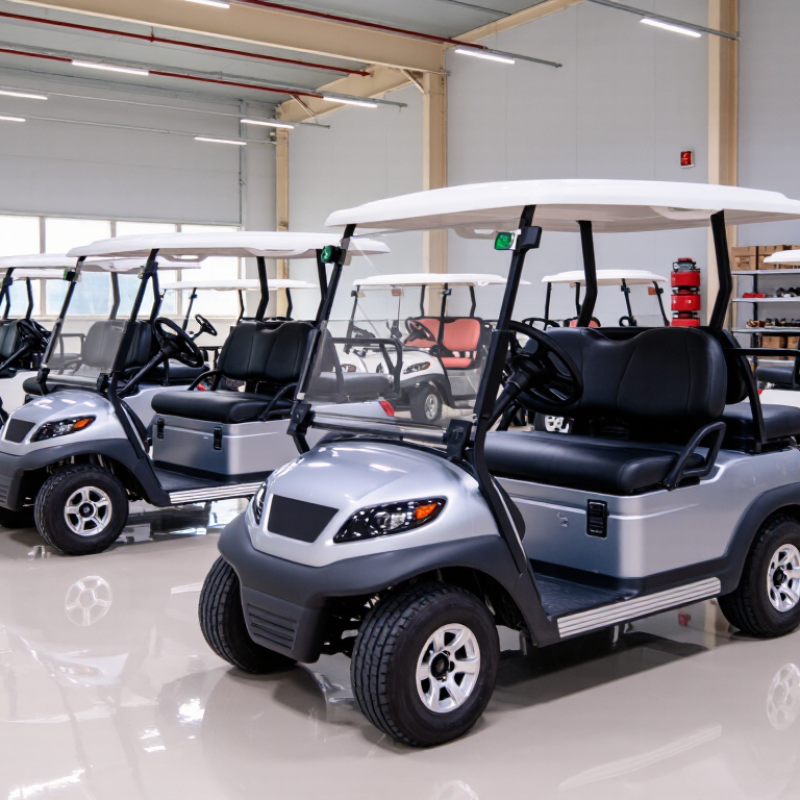
China Best Street Legal Golf Cart Suppliers?
Definition and Key Features of Street-Legal Golf Carts in China
A street-legal golf cart is a low-speed electric vehicle designed for approved public roads. It is not simply a golf cart with brighter lights. Depending on the destination, it may require headlights, brake lights, turn signals, mirrors, seat belts, a horn, windshield wipers, and reflective markings. Road registration rules differ between Chinese regions and export markets, so buyers should confirm requirements with local authorities.
In China, experienced suppliers usually provide lithium or lead-acid battery options, sealed electrical connectors, hydraulic brakes, and speed-control systems. A practical vehicle should offer stable steering, strong frame welds, clear wiring, and comfortable seating for daily short trips. Ask for battery test records, charger specifications, vehicle identification details, and inspection documents. These details reveal more than polished catalog photographs.
Supplier reliability also depends on production control and after-sales support. Request sample testing before placing a large order. Check how the supplier handles spare parts, battery replacement, and warranty claims. Some suppliers describe a vehicle as street legal too quickly. That wording needs careful review. I have found that small omissions, such as missing side reflectors or unclear braking data, can delay approval. The safest choice is a supplier willing to explain limitations plainly and adapt equipment to the intended road authority.
| Evaluation Dimension | Definition or Typical Data | Key Street-Legal Feature | What Buyers Should Verify | Importance |
|---|---|---|---|---|
| Legal Classification | Golf carts are generally designed as low-speed electric vehicles for private roads, resorts, campuses, factories, and residential communities. | Public-road legality depends on the specific vehicle category, local traffic regulations, registration requirements, and permitted road types. | Confirm whether the vehicle can be registered and operated legally in the intended Chinese city or district. Do not assume that a golf cart is road legal nationwide. | Critical |
| Maximum Speed | Typical electric golf carts are commonly configured for approximately 20–40 km/h, depending on the model and application. | A controlled speed limit supports safer operation in communities, campuses, industrial parks, and other low-speed environments. | Check the tested maximum speed, controller settings, speedometer accuracy, and whether the speed configuration matches local requirements. | Critical |
| Drive System | Common configurations include rear-wheel drive, electric traction motors, and electronic motor controllers. | Electric drive provides low noise, zero tailpipe emissions during use, and smooth low-speed acceleration. | Request motor power, controller specifications, gradeability, thermal protection, and maintenance procedures. | High |
| Battery Type | Lead-acid and lithium-ion battery systems are both used in electric golf carts. | Lithium-ion batteries typically offer lower weight and faster charging potential, while lead-acid systems are widely available and usually have a lower initial purchase cost. | Verify battery chemistry, rated voltage, usable capacity, cycle-life test conditions, battery-management system, and replacement cost. | Critical |
| Operating Range | A practical advertised range may be approximately 60–150 km per charge, depending on battery capacity, passenger load, terrain, temperature, and driving speed. | A longer range reduces charging frequency for patrol, shuttle, tourism, and facility-transport applications. | Compare range test conditions, including payload, road surface, average speed, temperature, and battery state-of-health. | High |
| Charging System | Charging systems commonly use onboard or external chargers matched to the battery voltage and chemistry. | Over-current, over-voltage, short-circuit, and temperature protection improve charging safety. | Confirm input voltage compatibility, charging time, connector type, waterproof rating, charger certification, and automatic shutoff function. | High |
| Braking System | Typical systems include hydraulic or mechanical service brakes, with a separate parking brake. | Reliable braking is essential for passenger transport, slopes, wet surfaces, and repeated stop-and-go operation. | Ask for braking distance data, brake type, parking-brake performance, brake-light operation, and inspection records. | Critical |
| Lighting Equipment | Road-oriented configurations may include headlamps, rear lamps, brake lamps, turn indicators, hazard warning lamps, and reflectors. | Lighting improves visibility and helps other road users recognize the vehicle’s direction and braking actions. | Verify lamp positioning, brightness, wiring protection, switch functions, and compliance with the requirements of the intended operating area. | Critical |
| Safety Equipment | Common safety items include seat belts, mirrors, horn, windshield, wipers, reverse warning device, and emergency isolator. | These features reduce occupant and pedestrian risks during low-speed operation. | Check seat-belt anchorage, mirror visibility, windshield material, wiper performance, horn volume, and emergency power-disconnect access. | Critical |
| Vehicle Structure | Most golf carts use a steel or aluminum frame with a body made from polymer, fiberglass, or metal panels. | A rigid frame, protected battery compartment, stable suspension, and adequate ground clearance support durability and handling. | Inspect frame welding, corrosion protection, roof strength, suspension components, tire load rating, and underbody protection. | High |
| Passenger Capacity | Typical layouts include 2, 4, 6, 8, or more seats, depending on the wheelbase and intended use. | Seat layout should match the permitted passenger count and the vehicle’s rated payload. | Verify the number of designated seats, total payload, seating dimensions, handrails, step height, and passenger restraint provisions. | High |
| Payload Capacity | Many passenger golf carts have a rated payload of approximately 300–600 kg, although actual capacity varies by configuration. | A correctly rated payload helps maintain braking, stability, tire performance, and battery range. | Request the official payload rating and clarify whether it includes passengers, luggage, accessories, and optional equipment. | Critical |
| Dimensions and Turning Radius | Compact golf carts are commonly around 2.4–4.5 m long and approximately 1.2–1.5 m wide, depending on seating and cargo configuration. | A small turning radius is useful for narrow campus roads, resort paths, warehouses, and community streets. | Confirm overall dimensions, wheelbase, minimum turning radius, mirror width, ramp compatibility, and storage requirements. | Medium |
| Tires and Suspension | Configurations may use pneumatic or low-pressure tires with independent or dependent suspension systems. | Proper tire selection and suspension tuning improve comfort, steering control, and traction on paved or uneven surfaces. | Check tire size, load index, tread type, recommended pressure, suspension travel, and availability of replacement parts. | High |
| Weather Protection | Optional equipment may include roofs, windshields, doors, curtains, side panels, and weather-resistant electrical enclosures. | Weather protection extends operating capability in rain, strong sunlight, and cold conditions. | Verify roof drainage, windshield safety, sealing quality, corrosion resistance, water-ingress protection, and climate suitability. | Medium |
| Noise and Emissions | Battery-electric carts produce no tailpipe emissions during operation and generally operate more quietly than internal-combustion vehicles. | Low noise and zero tailpipe emissions are suitable for hospitals, resorts, schools, parks, and residential areas. | Evaluate motor noise, reverse alarms, tire noise, charging emissions, and local environmental restrictions. | Medium |
| Quality Documentation | Important documents include technical specifications, user manuals, wiring diagrams, battery information, inspection records, and spare-parts lists. | Complete documentation supports registration, maintenance, troubleshooting, and fleet management. | Request documents in English or Chinese, confirm specification consistency, and check whether the vehicle identification information is traceable. | High |
| After-Sales Support | Support may include commissioning guidance, operator training, warranty service, remote diagnosis, and spare-parts supply. | Reliable support reduces downtime and simplifies long-term fleet operation. | Review warranty duration, excluded items, response time, parts availability, service network, and technical-training arrangements. | High |
| Supplier Verification | A suitable supplier should provide consistent specifications, traceable production information, quality-control records, and export documentation where applicable. | Transparent verification helps distinguish a compliant manufacturer or trading supplier from a seller offering unsupported specifications. | Conduct factory or video audits, request product samples, verify test reports, inspect pre-shipment units, and use a written purchase specification. | Critical |
Request factory videos, production records, and recent customer references. Clear answers matter. Avoid suppliers giving vague technical details.
Ask about the battery system, motor rating, charging method, and quality checks. Battery labels should match the technical documents. Small mismatches deserve attention.
Examine frame welds for uneven beads, cracks, or thin coverage. Check suspension joints, tire markings, paint coverage, and wiring. Photos are not enough.
Test headlights, brake lights, turn signals, mirrors, the horn, and reverse alarms. Check seat belts, reflectors, safety glass, and road-rated tires. Braking matters most.
Ask for test reports, identification numbers, registration documents, and compliance labels. Confirm local rules with the registration office. Supplier advice alone is insufficient.
Confirm the vehicle’s speed classification before purchase. Test braking on a dry, controlled surface. A polished finish cannot offset weak stopping power.
Request service manuals, spare-part information, and clear written warranty terms. Ask whether controllers, chargers, and brake parts remain available for years. Promises should be written.
Yes, inspect one complete unit before approving a larger order. Check loose wiring, missing tools, poor paint coverage, and serial numbers. I once trusted a low quotation too much. That mistake was expensive.
This guide explains what defines a Street-Legal Golf Cart in China, including essential features such as lighting systems, mirrors, seat belts, braking equipment, safety glass, speed controls, and identification components. It also introduces China’s main manufacturing regions, helping buyers understand how production clusters may influence product variety, pricing, customization options, and supplier capabilities.
The article provides practical advice for evaluating Chinese suppliers, covering factory experience, quality control, testing procedures, documentation, and communication. It also highlights the legal, safety, and compliance requirements that should be confirmed before using a golf cart on public roads in the intended market. In addition, readers will learn about the typical purchasing process, available customization choices, packaging and shipping considerations, import coordination, spare-parts planning, warranty terms, and after-sales support. By reviewing these factors carefully, buyers can make more informed sourcing decisions and select products that match their intended use, safety expectations, and local requirements.