China’s 2-Passenger Electric LSV market is expanding with demand from resorts, campuses, industrial parks, and private communities. These compact vehicles offer quiet operation, simple parking, and lower local emissions than gasoline alternatives. However, “electric” does not automatically mean efficient, durable, or road-ready.
The International Energy Agency reported that global electric car sales exceeded 17 million units in 2024, showing stronger acceptance of electric mobility. That report focuses mainly on passenger cars, not low-speed vehicles. Still, it confirms a wider shift toward battery-powered transport. Grand View Research has also identified growing demand for electric golf carts and neighborhood vehicles, especially in controlled environments. These findings provide useful context, but they should not replace vehicle-level testing.
This guide examines China’s top 10 2-Passenger Electric LSV manufacturers through practical criteria. These include battery options, motor performance, charging time, driving range, chassis quality, braking systems, weather protection, customization, certifications, and after-sales support. Factory experience matters. So does transparent technical documentation.
A showroom model can look impressive.
Real performance appears on uneven paths, wet pavement, and repeated short trips. Battery range may fall sharply with hills, passengers, cold weather, or heavy accessories. Buyers should also verify local speed limits, registration rules, import requirements, and permitted operating areas. LSV regulations differ across countries and regions.
No ranking remains perfectly objective. Supplier data can be incomplete, and published range figures may use different testing conditions. Therefore, this list should support careful comparison, not replace independent inspection, sample testing, or professional compliance advice.
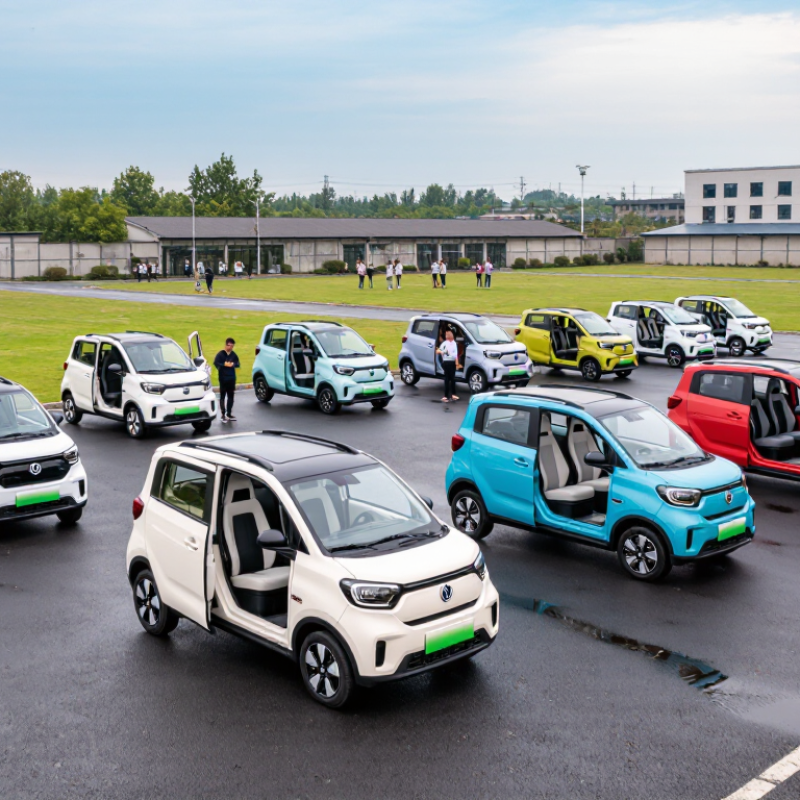
In China, two-passenger electric LSVs are compact, low-speed vehicles designed for short trips. They usually carry two adults on a front bench seat, with controls placed within easy reach. Their small footprint suits resorts, campuses, factories, residential communities, and private facilities. The layout is simple.
These vehicles commonly use 48V, 60V, or 72V electrical systems. Battery choices may include lead-acid or lithium technology. Driving ranges vary with load, temperature, road slope, and battery age. A practical inspection should check the frame, hydraulic or mechanical brakes, steering response, lights, seat belts, charger, and waterproof wiring. A clean dashboard does not prove dependable engineering.
The term LSV is not perfectly uniform across China. Speed limits, registration requirements, and permitted road use can differ by location and application. Buyers should verify local rules before moving a vehicle beyond private property. This point is often overlooked. Product documents should clearly state rated speed, climbing ability, payload, charging time, and battery warranty. In real use, a vehicle carrying two adults uphill may perform differently from a showroom test. That gap deserves honest evaluation. Reliable suppliers should provide traceable technical records, clear maintenance guidance, and accessible replacement parts.
Two-passenger electric LSVs in China are compact, low-speed vehicles generally used for short-distance commuting, campus transport, residential areas, tourism, and light-duty mobility. The benchmark below uses common battery-capacity configurations found in the Chinese market and excludes company and brand data.
Indicative range figures are typical market benchmarks. Actual results vary with battery chemistry, passenger load, road conditions, speed, temperature, and driving style.
Evaluating Chinese electric LSV manufacturers requires more than comparing prices and advertised range. The IEA’s Global EV Outlook 2024 reported that China accounted for more than half of global electric car sales in 2023. This indicates strong manufacturing capacity, but it does not prove LSV quality. Buyers should examine production consistency, engineering records, and export experience.
Request battery test reports, motor specifications, braking data, and charger certifications. Check whether an accredited laboratory completed the testing. In the United States, NHTSA defines a low-speed vehicle as a four-wheeled vehicle designed for 20–25 mph operation. Other markets may apply different rules. A capable manufacturer should explain these differences clearly. It should also provide VIN traceability, cell-batch records, and documented quality inspections. ISO 9001 or IATF 16949 certification helps, but certification alone is not enough.
Battery cost also needs careful interpretation. BloombergNEF reported an average global battery-pack price of 139 dollars per kWh in 2023. Small LSV packs may cost more because of lower production volume and specialized components. Ask for a complete warranty, not a vague promise. Some suppliers publish range figures from ideal conditions. Real-world hills, cold weather, passengers, and frequent charging can reduce range sharply. I would test a loaded vehicle on mixed roads before choosing a factory. A polished showroom can hide weak after-sales support. That is the uncomfortable part.
China’s Top 10 Two-Passenger Electric LSV Manufacturers should be judged by measurable performance, not showroom appearance. The International Energy Agency reported more than 14 million electric car sales worldwide in 2023, with China representing about 60% of the total. However, this figure does not isolate low-speed vehicles. That limitation matters.
China’s passenger electric LSV sector includes compact two-seat vehicles for resorts, campuses, factories, and private communities. A serious comparison should examine battery capacity, motor output, charging time, payload, braking systems, and corrosion protection. Practical details reveal more than glossy specifications. A 48- or 72-volt system may suit short routes, while larger battery packs can add useful range but also increase weight. Space is limited. Comfort can be overlooked.
China’s Top 10 list should also verify production experience, quality controls, export documentation, and after-sales support. The China Association of Automobile Manufacturers recorded 9.495 million new-energy vehicle sales in 2023, up 37.9% year on year. That broader growth shows strong manufacturing depth, but it cannot prove every LSV supplier is reliable. Factory audits, sample testing, warranty terms, and spare-parts availability remain essential. A low purchase price may hide inconsistent assembly or weak thermal protection. No ranking is perfect, especially when LSV definitions differ between markets. Local speed, lighting, battery, and road-use requirements must be checked before procurement.
| Rank | Anonymous Manufacturer Entry | Primary Market Focus | Typical Seating | Typical Top Speed | Typical Driving Range | Battery Options Commonly Offered | Typical Charging Time | Typical Payload | Common Application |
|---|---|---|---|---|---|---|---|---|---|
| 1 | Manufacturer A | Golf and resort mobility | 2 passengers | 25–40 km/h | 60–100 km | Lead-acid or lithium-ion | 6–10 hours | 180–250 kg | Resorts, campuses and gated communities |
| 2 | Manufacturer B | Urban neighborhood transport | 2 passengers | 30–45 km/h | 80–120 km | Lithium-ion, commonly LiFePO₄ | 5–8 hours | 200–300 kg | Short-distance urban and residential travel |
| 3 | Manufacturer C | Utility and light commercial use | 2 passengers | 25–40 km/h | 70–110 km | Lead-acid or LiFePO₄ | 6–10 hours | 250–350 kg | Industrial parks, facilities and maintenance operations |
| 4 | Manufacturer D | Export-oriented LSV production | 2 passengers | 25–45 km/h | 80–130 km | Lithium-ion | 5–8 hours | 180–280 kg | International distributors and private communities |
| 5 | Manufacturer E | Compact enclosed electric vehicles | 2 passengers | 30–45 km/h | 80–120 km | LiFePO₄ or ternary lithium | 6–9 hours | 180–260 kg | All-weather commuting and local transport |
| 6 | Manufacturer F | Tourism and sightseeing vehicles | 2 passengers | 25–35 km/h | 60–100 km | Lead-acid or lithium-ion | 6–10 hours | 160–240 kg | Hotels, scenic areas and tourism facilities |
| 7 | Manufacturer G | Personal mobility and lifestyle vehicles | 2 passengers | 25–40 km/h | 60–110 km | LiFePO₄ | 5–8 hours | 180–250 kg | Retirement communities and private estates |
| 8 | Manufacturer H | Fleet and institutional transport | 2 passengers | 25–40 km/h | 70–120 km | Lead-acid or LiFePO₄ | 6–10 hours | 220–320 kg | Universities, factories and logistics compounds |
| 9 | Manufacturer I | Customized low-speed electric vehicles | 2 passengers | 25–45 km/h | 70–130 km | Lithium-ion | 5–8 hours | 180–300 kg | OEM projects and specialized fleet applications |
| 10 | Manufacturer J | Entry-level and value-focused LSVs | 2 passengers | 25–35 km/h | 50–90 km | Lead-acid or lithium-ion | 6–10 hours | 160–240 kg | Residential areas, campuses and recreational use |
Note: Specifications represent commonly published ranges for two-passenger electric low-speed vehicles manufactured in China. Actual performance varies according to battery capacity, payload, road conditions, climate, vehicle configuration and local low-speed vehicle regulations.
China’s ten leading two-passenger electric LSV manufacturers differ more in engineering than appearance. The International Energy Agency’s Global EV Outlook 2024 reports that China produced over half of the world’s electric cars in 2023. This industrial scale supports wider choices in batteries, motors, and controllers.
Some suppliers focus on compact frames for resorts, campuses, and private communities. Others offer stronger suspension, larger tires, and higher ground clearance for uneven roads. Most models use 48V or 72V systems.
Lead-acid batteries reduce purchase cost, while lithium packs offer lower weight and faster charging. The difference is practical. A lithium model may carry more usable energy, but replacement costs remain higher.
Advertised range needs careful checking. Testing conditions often use flat roads, light loads, and moderate speeds. Real use changes quickly with hills, passengers, cold weather, and repeated stops.
According to the U.S. Department of Energy’s Alternative Fuels Data Center, low-speed vehicles are designed for restricted-speed environments, not ordinary high-speed traffic.
Buyers should compare controller limits, braking hardware, frame protection, charger quality, and payload ratings. After-sales support also separates manufacturers. Some provide detailed wiring diagrams and local parts; others offer attractive customization but slower technical responses. That weakness matters. A polished dashboard cannot repair poor service.
A top-ten list is only a starting point when choosing a Chinese electric LSV supplier. Define the vehicle’s real use first. Will it carry guests, tools, or groceries? Check seating comfort, ground clearance, turning radius, payload, and battery range on your actual routes. A vehicle that performs well on smooth factory roads may struggle on wet hills. Test it locally.
Ask for proof. Review factory qualifications, production capacity, quality-control records, battery traceability, and testing documents for your destination market. Request a sample vehicle before placing a large order. Inspect welds, wiring protection, brake response, charging behavior, and controller performance. Small details matter. Some suppliers provide attractive specifications but vague battery data.
After-sales support often separates a dependable supplier from a cheap seller. Confirm warranty terms, spare-parts availability, technician training, response times, and remote troubleshooting. Clarify replacement costs for batteries, chargers, tires, and suspension parts. Ask whether manuals and fault codes are available in clear English. In practical sourcing, a polished factory tour can still hide weak service planning. No checklist is perfect. Recheck payment terms, delivery schedules, inspection procedures, and packaging before signing. A supplier willing to discuss failures openly may deserve more trust than one promising flawless performance.
Compare production consistency, engineering records, export experience, and after-sales support. A polished showroom proves very little.
Request battery test reports, motor specifications, braking data, and charger certifications. Check whether accredited laboratories completed the tests.
Ask the manufacturer to explain local speed, lighting, battery, and road-use requirements. Rules differ between markets. A capable supplier should explain them clearly.
Look for cell-batch records, VIN traceability, documented inspections, and thermal-protection details. Certification helps, but it cannot prove every production batch is perfect.
Hills, cold weather, passengers, and frequent charging can reduce range sharply. Test a loaded vehicle on mixed roads. Ideal conditions are rarely ordinary.
Small LSV battery packs may cost more per kilowatt-hour because production volumes are lower. Specialized components can also increase costs. Cheap is not always efficient.
Examine battery voltage, motor output, charging time, payload, braking systems, and corrosion protection. A larger battery may extend range but add weight. Space and comfort are easy to overlook.
It should state coverage periods, battery conditions, charger support, spare-parts access, and repair responsibilities. Vague promises are weak protection. I would request examples of previous claims.
Conduct factory audits, inspect sample vehicles, review quality records, and confirm spare-parts availability. A ranking can still be wrong. Real inspection matters more than presentation.
China’s 2-Passenger Electric LSV market is developing rapidly as demand grows for compact, energy-efficient vehicles used in communities, resorts, campuses, farms, and other low-speed environments. These vehicles typically combine a small footprint, quiet electric power, simple operation, and practical seating for two people. When evaluating Chinese manufacturers, buyers should consider product quality, battery options, driving range, charging systems, safety equipment, customization capabilities, production experience, after-sales service, and compliance with applicable regional requirements.
A review of China’s top 10 two-passenger electric LSV manufacturers can help buyers compare differences in design, materials, performance, configuration, delivery capability, and supplier support. The best supplier will depend on the intended application, terrain, climate, usage frequency, budget, and desired features. Before placing an order, buyers should verify technical specifications, warranty terms, spare-parts availability, inspection procedures, communication efficiency, and export experience. Careful comparison ensures that the selected 2-Passenger Electric LSV offers dependable performance, suitable operating costs, and long-term value.