Buying a Neighborhood Electric Vehicle can feel simple until real-life details enter the picture. A quiet test drive may reveal weak hill performance, limited storage, or uncomfortable seating. The glossy brochure rarely shows everything.
Automotive journalist John Voelcker has emphasized, “The right car depends on how you use it.” That principle guides this practical buying guide. Before choosing a model, examine your daily routes, road speeds, passenger needs, charging access, and weather conditions. A vehicle that works beautifully on a private community may feel unsuitable on busier public streets. Confirm local operating requirements with the relevant transportation authority.
Start with the distance you actually travel. Measure it. Then add a sensible reserve for cold mornings, tire pressure changes, and unexpected errands. Battery range claims can change under real conditions. Ask dealers about battery chemistry, replacement costs, charging time, warranty coverage, and service availability. Look closely at headlights, mirrors, seat belts, brakes, and weather protection. Small details become important after several weeks.
Do not buy only for appearance. It is an easy mistake. A bright color and polished dashboard cannot solve poor visibility or an awkward charger location. Try entering the vehicle with groceries. Test the turning radius near a narrow driveway. Listen for rattles. Ask difficult questions, even if the salesperson seems rushed.
These ten tips are designed to make the decision clearer, safer, and more realistic. Some recommendations may not fit every buyer. That is the point. Your neighborhood, climate, budget, and driving habits should shape the final choice.
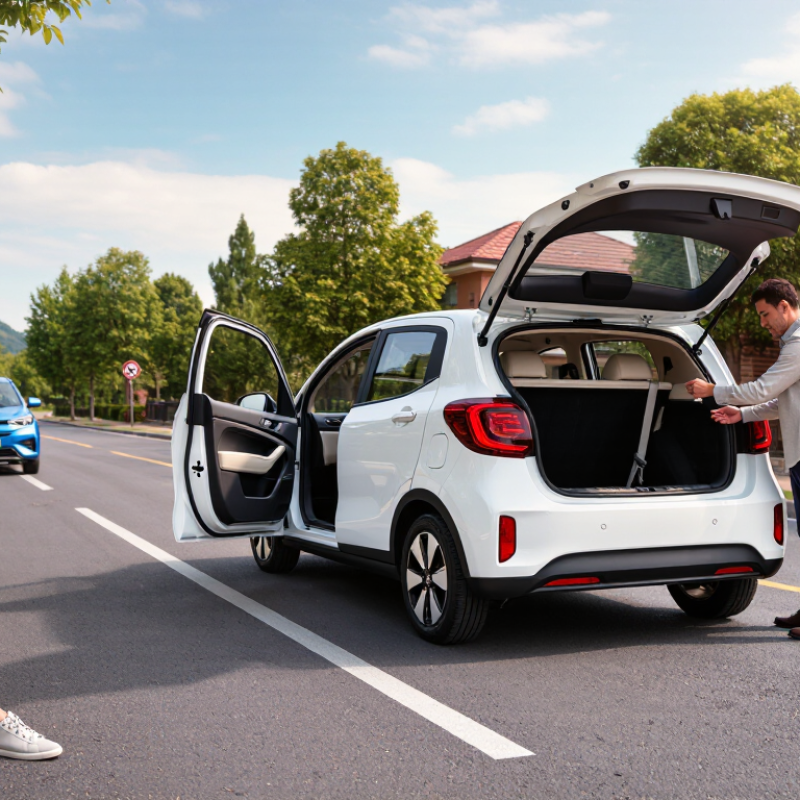
Before choosing a neighborhood electric vehicle, measure your real daily travel. Write down work, school, grocery, and appointment trips. Include unexpected detours. A stated range is not your personal range. Cold weather, hills, heavy loads, and frequent stops can reduce usable distance. Track one ordinary week, not your best week. That record exposes inconvenient trips you might otherwise ignore.
Add the round-trip distance for your busiest day. Then include a practical reserve for traffic, weather, and route changes. Many drivers prefer a 20–30 percent buffer, but your needs may differ. Use range honestly. Measure charging time against your schedule. Home charging may be convenient, while relying on public charging requires more planning. Check whether your parking space has suitable electrical access before purchasing.
During a test drive, repeat part of your normal route. Carry the passengers and equipment you usually take. Notice how quickly the estimated range changes on hills or busy streets. Confirm the vehicle’s rated range, charging requirements, payload limit, and battery coverage in official documents.
I once underestimated short errands because each trip seemed insignificant. Together, they consumed much more energy. That mistake changed how I plan daily driving.
Weather can still surprise you. Keep notes after each trip.
Buying a neighborhood electric vehicle starts with a legal map, not a test drive. Local rules may separate golf carts, low-speed vehicles, and mobility vehicles. In the United States, NHTSA’s Federal Motor Vehicle Safety Standard 500 defines low-speed vehicles as vehicles reaching 20–25 mph. That classification can affect registration, equipment, insurance, and permitted roads.
Ask your city or county transportation office for a written route list. Check speed limits, crossing rules, and whether roads require a posted minimum speed. Some streets may look suitable but prohibit low-speed vehicles. Private communities can add stricter access rules. Review parking requirements too. A vehicle allowed on one neighborhood street may be barred from an adjoining highway.
Do the paperwork early. Confirm title requirements, driver licensing, liability coverage, lighting, mirrors, seat belts, and nighttime restrictions. The U.S. Department of Energy’s Alternative Fuels Data Center notes that electric-vehicle rules and incentives vary by state and locality. Treat online dealer claims cautiously. Laws change.
Weather deserves attention. The Insurance Institute for Highway Safety reports that larger speed differences between vehicles can increase crash risk. On a 25-mph vehicle, a busy 40-mph corridor may feel uncomfortable, even when legal. Plan quieter routes, inspect charging access, and ask how battery performance changes in cold weather. I would also test the route at rush hour. A short trip on a map can become a stressful daily journey.
10 Tips for Buying a Neighborhood Electric Vehicle
Battery capacity should match your daily route, not your imagination. Check both gross and usable capacity, because software reserves part of the pack. A 10 kWh battery may provide less driving energy than expected. The U.S. Department of Energy’s Alternative Fuels Data Center reports that Level 1 charging usually adds 2–5 miles per hour. Level 2 charging can add 10–30 miles per hour. Confirm the vehicle’s onboard charger before paying for electrical upgrades. A larger battery is not always better. It can increase weight, cost, and charging time.
Study efficiency in watt-hours per mile, not range alone. The International Energy Agency reports that electric cars typically use three to five times less energy than comparable conventional cars. Neighborhood vehicles may perform better because they travel slowly, but hills, passengers, cold weather, and tire pressure still matter. Ask for test results under realistic conditions. I once trusted a best-case range figure and underestimated winter energy use. That was careless.
Look for accessible charging at home, work, or a community facility. Check plug type, cable length, weather protection, and circuit capacity. A basic outlet may be enough for short trips. Faster charging helps only when your schedule needs it. Compare warranty coverage, battery replacement cost, and charging losses. The U.S. EPA notes that published efficiency figures are test-based estimates, not guarantees. Leave a practical reserve. Perfect calculations rarely survive real life.
10 Tips for Buying a Neighborhood Electric Vehicle
Tip 1: Check core safety equipment before admiring the interior. Look for reliable seat belts, bright lighting, stable mirrors, strong door latches, and responsive brakes. During a test drive, listen for rattles and notice how quickly the vehicle stops. Tip 2: Ask about stability on uneven pavement. A narrow vehicle may feel different near curbs, gravel, or sharp turns. Confirm the safety ratings, maximum speed, and recommended passenger limits in official documents. Local driving rules also matter.
Tip 3: Sit in every passenger position. Knees should not press against the front seat, and adults should enter without twisting awkwardly. Tip 4: Test comfort on a real route, not only inside a showroom. Drive over speed bumps and rough residential streets. Watch for harsh jolts, seat movement, poor visibility, or wind noise. Adjustable seats help, but they cannot fix limited legroom. Tip 5: Measure the vehicle with your family present. A brochure may show seating capacity, yet actual shoulder space can feel tight.
Tip 6: Inspect the rear passenger area carefully. Check headroom, foot clearance, grab handles, and access to seat belts. Tip 7: Bring common items, such as groceries or a folded stroller. Storage can disappear quickly when several passengers ride together. I once underestimated shoulder room during a short test drive. That mistake became obvious after twenty minutes. Tip 8: Ask a qualified technician about battery placement, charging safety, and routine inspections. Clear answers build trust. A practical vehicle should feel secure, calm, and usable every day.
| # | Buying Tip | What to Evaluate | Practical Reference | Why It Matters |
|---|---|---|---|---|
| 1 | Confirm the vehicle category | Check whether the vehicle is classified as a neighborhood electric vehicle, low-speed vehicle, or an off-road utility cart in your jurisdiction. | Typical LSV speed: 20–25 mph | Classification affects where the vehicle may legally operate, registration requirements, insurance, and required equipment. |
| 2 | Prioritize essential safety equipment | Inspect seat belts, headlights, taillights, brake lights, turn signals, reflectors, mirrors, a parking brake, and a visible vehicle identification number. | Verify applicable low-speed-vehicle requirements | These components improve visibility, occupant restraint, and basic road readiness, especially in mixed traffic. |
| 3 | Check braking performance | Test the service brake and parking brake on level and gently sloped surfaces. Look for smooth engagement, consistent stopping, and no unusual noise. | Test with a full passenger load | A heavier load increases stopping distance and places greater demand on the tires, brakes, and suspension. |
| 4 | Assess battery capacity and range | Compare usable battery capacity, claimed range, charging time, battery age, warranty coverage, and expected range with passengers or cargo. | Common advertised range: 30–60 miles | Actual range can decrease because of cold weather, hills, low tire pressure, payload, speed, and frequent stops. |
| 5 | Review charging requirements | Identify the charger type, cable length, household voltage, circuit requirements, outdoor-weather protection, and estimated full-charge time. | Many models use 120 V or 240 V AC charging | A vehicle is more convenient when it can be safely charged at home without difficult electrical modifications. |
| 6 | Measure passenger space | Measure seat width, legroom, headroom, step-in height, rear-seat access, and the usable space between occupants. | Typical layouts: 2, 4, or 6 seats | A stated seating capacity does not guarantee that every passenger will have adequate room or easy access. |
| 7 | Verify payload and cargo capacity | Check the maximum combined weight of passengers, luggage, accessories, and cargo. Inspect the cargo bed, rear compartment, or storage area. | Payload varies by configuration | Overloading can reduce range, handling stability, braking performance, tire life, and suspension durability. |
| 8 | Test comfort and ride quality | Evaluate seat cushioning, back support, steering effort, suspension response, wind protection, noise, vibration, and ease of entry. | Drive on smooth and uneven pavement | A short test drive on different surfaces reveals comfort and control issues that are not obvious when the vehicle is stationary. |
| 9 | Inspect handling and visibility | Check turning radius, steering response, tire condition, mirror coverage, windshield visibility, lighting, and stability on slopes. | Use a complete three-point-turn test | Good visibility and predictable handling are especially important in narrow streets, parking areas, and residential neighborhoods. |
| 10 | Calculate total ownership cost | Include purchase price, registration, insurance, electricity, tires, brake service, battery replacement, storage, and charging equipment. | Compare cost per mile, not only purchase price | A lower upfront price may be offset by shorter battery life, limited parts availability, higher service costs, or inadequate warranty support. |
Note: Specifications and road-use rules vary by vehicle configuration and location. Confirm local registration, licensing, insurance, speed-limit, and road-access requirements before purchase.
Buying a neighborhood electric vehicle requires more than comparing purchase prices. Calculate total ownership costs over at least five years. Include the vehicle, destination fees, registration, insurance, charging equipment, electricity, tires, and battery-related service. A home charger may need wiring upgrades. Ask for a written installation estimate.
Electricity is usually predictable, but seasonal efficiency can change. In cold weather, cabin heating may reduce usable range. Keep a monthly cost sheet. Small expenses accumulate.
Maintenance is simpler, not free. Inspect brakes, suspension, steering, lights, and tire wear at scheduled intervals. Ask whether parts are stocked locally and how long common repairs take. Review the warranty line by line. Confirm coverage periods for the battery, charger, motor, electronics, and corrosion.
Check exclusions for misuse, water exposure, commercial use, and missed service. Request the required maintenance records. I once treated a long warranty as complete protection; that assumption was too optimistic. Deductibles, diagnostic fees, and transport costs can still apply. Keep copies of every receipt. Also verify local road-access and registration rules before purchase.
A low price is not always a low cost.
Check local road-access rules, speed limits, registration, insurance, and licensing requirements. Ask for a written route list. Some nearby streets may still be restricted.
Compare the vehicle’s speed with surrounding traffic. A 25-mph vehicle may feel stressful beside faster vehicles. Test the route during rush hour. Quiet streets can make a major difference.
Look for secure seat belts, bright lights, stable mirrors, strong door latches, and responsive brakes. Listen for rattles during the test drive. Notice stopping distance.
Sit in every seat with your family present. Check knee room, shoulder space, headroom, foot clearance, and entry angles. Adults should not twist awkwardly.
Yes. Drive over speed bumps, rough pavement, curbs, and sharp turns. Watch for harsh jolts, poor visibility, seat movement, and excessive wind noise. A showroom floor hides problems.
Bring everyday items, such as groceries or a folded stroller. Check whether storage remains usable with several passengers inside. Space disappears quickly.
Include the purchase price, registration, insurance, charging equipment, electricity, tires, maintenance, and battery service. Keep a monthly cost sheet. Small expenses accumulate.
Ask about home wiring, charging safety, battery placement, and cold-weather performance. Cabin heating can reduce usable range. Request a written installation estimate.
Read coverage for the battery, charger, motor, electronics, and corrosion. Check exclusions, service requirements, deductibles, diagnostic fees, and transport costs. Keep every receipt.
Do not judge value by purchase price alone. Confirm road access, repair support, parts availability, and required maintenance. I once trusted a long warranty too quickly. That was optimistic.
Buying a Neighborhood Electric Vehicle starts with understanding how and where you plan to drive. Consider your typical daily distance, road conditions, passenger needs, and whether the vehicle’s driving range can support your routine without frequent charging. Before purchasing, review local regulations, speed limits, registration requirements, and which roads the vehicle can legally access. These factors will help you choose a practical model rather than relying only on appearance or advertised performance.
It is also important to compare battery capacity, charging methods, charging time, and energy efficiency. Look closely at safety equipment, seating comfort, storage space, visibility, and protection from changing weather. Finally, estimate the total cost of ownership, including electricity, insurance, maintenance, battery replacement, and warranty coverage. A careful evaluation of these details can help you select a Neighborhood Electric Vehicle that fits your lifestyle, budget, and long-term transportation needs.