0%

Choosing DOT Compliant Golf Cart Lighting starts with a simple question: where will the cart be driven? A cart used on private paths has different needs from one operated near public roads. The right lighting improves visibility, but a bright lamp alone does not establish compliance. Mounting position, beam pattern, color, wiring, and the cart’s intended use all matter.

This guide looks at those details in practical terms. Think of a headlamp illuminating a dark driveway without dazzling someone approaching from the other direction. Think, too, of a loose connector that flickers after a bumpy ride. Small details count. So does the owner’s manual and the requirements that apply in the cart’s location. Rules can differ, and equipment marketed as “street legal” should not be treated as automatically compliant.

A verified expert name and quotation were not included in the supplied material, so I won’t invent one. Before publication, add a checked statement from a qualified golf-cart lighting professional. That matters. Readers deserve advice they can trace and verify. Even careful buyers can overlook a small fitment detail; this guide aims to make those checks easier. It is a practical starting point, not a substitute for confirming local requirements or getting qualified installation advice.
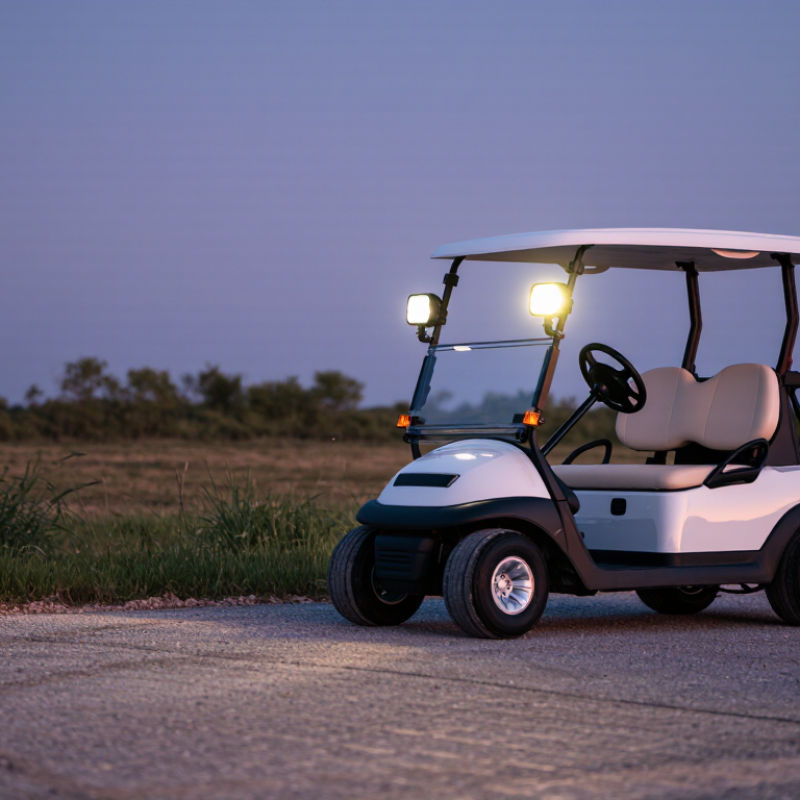
2026 How to Choose DOT Compliant Golf Cart Lighting

What DOT Compliance Means for Golf Cart Lighting

What DOT Compliance Means for Golf Cart Lighting

“DOT compliant” is not simply a promise that a light looks bright or sturdy. DOT refers to the U.S. Department of Transportation, and applicable requirements depend on how the vehicle is classified.

A recreational golf cart and a low-speed vehicle may face different equipment rules. Check the category first. For vehicles classified as low-speed vehicles, federal standards include lighting and signaling equipment, such as headlamps, tail lamps, and turn signals.

A compliant setup needs more than suitable-looking parts. The lamps must be appropriate for their intended positions, wired correctly, and visible from useful angles. At dusk, a rear signal hidden by a bag or cargo rack may be hard for another driver to see.

Beam direction matters too; a badly aimed headlamp can leave the road dim or shine into oncoming traffic.

Small details count.

Ask for clear product documentation, including applicable standards and vehicle-fit guidance. A DOT marking on one lamp does not, by itself, establish that the entire cart meets every requirement. That distinction is easy to miss.

Before buying or installing lights, confirm the vehicle’s classification and check current federal, state, and local requirements. Requirements can vary, and product descriptions do not always explain the limits clearly.

How Vehicle Type and Intended Use Affect Lighting Requirements

2026 How to Choose DOT-Compliant Golf Cart Lighting
How Vehicle Type and Intended Use Affect Lighting Requirements

A golf cart used only on a private course has different lighting needs from one operated on public roads. Classification matters. In the United States, a vehicle configured as a low-speed vehicle may need to meet Federal Motor Vehicle Safety Standard No. 500, including requirements for headlamps, turn signals, taillamps, stop lamps, and reflectors. A lighting upgrade alone does not establish that the whole vehicle complies. Brightness alone is an imperfect measure.

Intended use shapes practical choices, too. A cart moving between shaded fairways may benefit from clear side visibility, while a neighborhood vehicle used at dusk needs conspicuous front and rear signals. NHTSA’s 2022 Traffic Safety Facts: Pedestrians reports that 77% of pedestrian fatalities occurred in dark conditions. That figure is a useful reminder: being seen matters, not just seeing the road. A common planning mistake is choosing lamps by appearance before checking vehicle classification and actual routes.

Tips: Identify whether the cart is a golf cart or a low-speed vehicle, then check applicable state and local requirements. Match lamp placement and function to the vehicle’s configuration. Keep lenses clean, test every signal, and verify that replacement parts suit the cart’s electrical system. When requirements are unclear, ask a qualified vehicle-lighting professional.

2026 How to Choose DOT Compliant Golf Cart Lighting — How Vehicle Type and Intended Use Affect Lighting Requirements
Vehicle Type or Use Typical Classification Clues Lighting Requirements to Check Practical Selection Guidance
Private-property golf cart Designed primarily for golf courses or private property; often has a maximum speed of 20 mph or less. Its legal status depends on applicable federal definitions and state or local law. There is no single nationwide lighting package that makes every golf cart legal for every public road. Property rules and local laws may still require lights for operation after dark. For private use, select lights suited to the vehicle’s electrical system and the conditions of use. Check the property rules and local requirements before using the cart on public streets.
Low-speed vehicle (LSV) used on public roads Generally, a four-wheeled vehicle with a maximum speed greater than 20 mph and not greater than 25 mph, and a GVWR under 3,000 lb. Confirm the vehicle’s certification and classification; appearance alone does not establish LSV status. Federal Motor Vehicle Safety Standard (FMVSS) No. 500 specifies equipment that includes headlamps, front and rear turn signal lamps, taillamps, stop lamps, and reflex reflectors. Other required LSV equipment also applies. Choose a vehicle and lighting system intended for the LSV’s applicable federal requirements. Confirm that the complete vehicle—not just an individual lamp—has the required certification and equipment.
Street use at night Use on public roads after dark, where permitted for that vehicle and road. Headlamps and rear lighting must meet the requirements that apply to the vehicle classification and jurisdiction. Local rules may add restrictions or requirements. Use correctly aimed headlamps and functional taillamps. Check visibility, mounting, wiring, and operation, and verify that the route and time of use are permitted locally.
Frequent turns, intersections, or traffic exposure Regular travel on streets where the vehicle is legally allowed, including routes with intersections or changing traffic conditions. For an LSV, front and rear turn signal lamps are part of the FMVSS No. 500 equipment requirements. Other vehicle types may be subject to state or local rules. Prioritize clearly visible, correctly positioned turn signals and reliable controls. Do not assume that adding aftermarket signals alone converts a golf cart into a road-legal LSV.
Low visibility or poorly lit areas Operation around dawn, dusk, rain, shade, or unlit private roads. Required lamps and reflectors depend on the vehicle’s classification and applicable law. Supplemental work or area lighting may be useful on private property but does not replace required road equipment. Consider beam coverage and glare as well as brightness. Aim lamps to illuminate the path without unnecessarily dazzling other drivers, and keep lenses clean and unobstructed.
Replacement or upgrade of existing lamps Repair, restoration, or conversion involving new headlamps, signals, tail lamps, or reflectors. Check the lamp’s intended application, fit, electrical compatibility, mounting position, and any applicable photometric or installation requirements. A “DOT” marking on a component does not by itself establish that the vehicle meets all requirements. Match replacement parts to the vehicle and its certified configuration where applicable. Have the completed installation checked for correct function, secure mounting, and proper aim.
Vehicle used on both private property and public roads A cart or LSV that moves between a private site and roads open to public traffic. Public-road use can involve vehicle classification, federal equipment standards, registration, and state or local operating rules. Private-property permission does not establish public-road legality. Identify the vehicle’s legal classification first, then verify the requirements for every jurisdiction and road on the planned route. Keep required lighting functional whenever the vehicle is used.
Important: “DOT compliant” depends on the vehicle, the complete equipment installation, and the rules that apply to its use. FMVSS No. 500 applies to qualifying low-speed vehicles; it does not make every golf cart road-legal. Confirm current federal, state, and local requirements before purchase or public-road operation.

Which Lighting Functions and Components to Check

2026 How to Choose DOT Compliant Golf Cart Lighting

Which Lighting Functions and Components to Check

Start by confirming how the cart is classified. “Golf cart” and “low-speed vehicle” can have different equipment requirements. For U.S. vehicles subject to them, FMVSS No. 108 covers lighting equipment, while FMVSS No. 500 specifies equipment for low-speed vehicles. A DOT marking on a lamp alone does not prove the whole cart meets every applicable requirement. Check the vehicle documentation and local requirements.

Inspect each function: low and high beams, turn signals, tail and brake lamps, hazard lights, and front and rear reflectors. NHTSA’s 2022 Traffic Safety Facts reports 42,514 U.S. traffic deaths, a sobering reason to make a cart easy to see. Check that lenses are clear, beams aim correctly, and both sides illuminate consistently. Look closely at wiring, fuses, connectors, mounting points, and weather seals; a loose ground can cause intermittent failures.

Tips: Test lights at dusk against a wall, then press the brake and activate each signal. Replace cracked lenses promptly. Keep a checklist. It can still miss a poor beam angle, so inspect from a driver’s eye level too.

How to Verify DOT Markings and Product Documentation

Before checking a lamp, identify how the cart is classified and where it will operate. A recreational golf cart and a low-speed vehicle may face different equipment requirements. In the United States, manufacturers generally self-certify products against applicable federal standards; a “DOT” mark alone is not government approval. Check the lens. Match its molded markings to the product label, lighting function, and installation instructions.

For low-speed vehicles, NHTSA’s FMVSS No. 500 specifies equipment including headlamps, tail lamps, stop lamps, turn signal lamps, and reflex reflectors. FMVSS No. 108 covers lighting equipment on applicable motor vehicles, but not every golf cart automatically falls into that category. NHTSA’s 2022 Traffic Safety Facts reported 42,514 U.S. traffic deaths. That figure is not golf-cart-specific, but it underscores why visibility claims deserve careful checking.

Ask for the manufacturer’s signed compliance statement, applicable standard numbers, test reports, and wiring diagram. Confirm that reports identify the exact lamp model, color, mounting position, and test date; a report for a similar-looking lamp may not apply. Paperwork matters. Compare each document with the physical markings, and contact the manufacturer if codes or part numbers conflict. One limitation remains: documents can be incomplete, so have a qualified technician verify fit, aiming, and operation after installation.

How to Install and Test a Compliant Lighting Setup

2026 How to Choose DOT Compliant Golf Cart Lighting

Before installation, check the rules for your location and intended roads. Lighting requirements can vary, so a “DOT compliant” label alone may not confirm that a complete setup meets local standards. Verify required lamp types, colors, positions, and any applicable certification marks. Keep the product instructions and purchase details for reference. Small checks matter.

Mount each light securely, following its instructions and the cart’s wiring diagram. Use suitable connectors, protect wires from sharp edges, and keep them away from moving parts. After installation, inspect the connections for looseness or exposed wire. Turn on each function separately: headlights, tail lamps, brake lights, and turn signals, if fitted. Check visibility from the front, rear, and sides, preferably at dusk in a safe, private area. Ask another person to confirm that brake lights brighten when the pedal is pressed. A light that works in the garage may be hard to see outdoors.

Tips: Photograph the wiring before changing it. Test again after the first drive, since vibration can loosen a connection. If a lamp flickers or stays dim, stop and inspect the ground and connectors before riding. I once overlooked a loose ground; it was an easy miss.

FAQS

How do lighting needs differ between course-only carts and road-used vehicles?

A cart crossing shaded fairways may need clear side visibility. A vehicle used on public streets at dusk needs conspicuous front and rear signals. Classification matters.

Does installing brighter lamps make a cart compliant?

No. A lighting upgrade alone does not establish that the whole vehicle meets applicable requirements. Brightness is only one factor.

Which lights might a low-speed vehicle need?

Requirements may include headlamps, turn signals, taillamps, stop lamps, and reflectors. Check the rules that apply to the vehicle and location.

What should I check when choosing lights for dusk travel?

Consider whether drivers and pedestrians can see the cart from the front, rear, and sides. Clean lenses help. Being seen matters.

What should I verify before installing replacement lights?

Check required lamp types, colors, positions, and any applicable certification marks. Confirm that the parts suit the cart’s electrical system.

How can I test a new lighting setup?

Test each function separately, including headlights, tail lamps, brake lights, and turn signals, if fitted. Ask someone to watch the brake lights as you press the pedal. Try it at dusk in a safe, private area.

What installation details are easy to miss?

Secure mounts and suitable connectors matter. Keep wires away from sharp edges and moving parts. Photograph the wiring first. I sometimes forget that step.

What should I do if a lamp flickers or looks dim?

Stop and inspect the ground connection and connectors before using the cart. Test again after the first drive; vibration can loosen a connection. A garage test may not tell the whole story.

Conclusion

Choosing DOT Compliant Golf Cart Lighting starts with understanding what compliance means for the vehicle and where it will be used. A cart’s design, speed, and intended setting can affect which lighting features are appropriate, so check the requirements that apply to that specific vehicle and use. Review the full setup, including headlights, tail lamps, brake lights, turn signals, reflectors, and any other components needed for clear visibility and communication.

Before purchasing, inspect product markings and documentation to confirm that the parts are identified for the intended application and supported by clear specifications. After installation, verify that each light is securely mounted, correctly aimed, and operating as expected. Test the controls and functions in different conditions, and check wiring and connections for reliability. A careful review of the vehicle, components, documentation, and finished installation can help create a lighting setup that is practical, visible, and suited to its intended use.

Ethan

Ethan

Ethan is a professional marketing specialist dedicated to helping customers understand practical solutions, product value, and emerging trends in the industry. With extensive knowledge of the company’s products and a strong understanding of customer needs, he creates clear, informative, and useful......